Material Comparison· 6 min read· Updated
Western Red Cedar vs Pressure-Treated Pine for Texas Fences
Western Red Cedar or pressure-treated pine for your Texas fence? A clear look at rot resistance, warping in the heat, appearance, and 15-year cost.
By the Oakwood Landscaping team · Reviewed by Emmanuel Heredia Sanchez, Owner & TCEQ Licensed Irrigator
When homeowners compare fence quotes in Round Rock, the biggest price difference usually comes down to one line: cedar or pine. Pressure-treated pine is cheaper on day one, and cedar costs more upfront - but the sticker price tells only part of the story. What matters is how each wood behaves in relentless Texas sun and expansive clay over the ten-to-fifteen-year life of a fence.
This is an honest comparison of Western Red Cedar and pressure-treated pine on the factors that actually decide fence longevity here: natural rot and insect resistance, how each holds its shape in extreme heat, appearance over time, real cost across a full replacement cycle, and why certain neighborhoods require cedar. Both can make a good fence when built well - they just age very differently.
Natural Tannins and Oils: Why Cedar Naturally Resists Termites and Rot
Western Red Cedar resists decay and insects through its own chemistry. The wood contains natural oils and tannins - extractives called thujaplicins - that make it unappealing to termites and slow to rot, without any chemical treatment. That built-in resistance is why cedar has been a premium fence and siding wood for generations, and why it holds up so well as visible pickets and rails exposed to sun and rain.
Pressure-treated pine gets its rot and insect resistance the other way: chemicals are forced into the wood under pressure. Done right, ground-contact-rated treated pine resists decay effectively, which is why treated posts perform well in the ground. The catch is that not all treated pine is equal - above-grade treated pickets are far less protected, and treatment quality and penetration vary by supplier and grade.
The practical difference shows up over time. Cedar's resistance is consistent through the whole board and does not depend on how well a chemical soaked in. Pine's protection is only as good as its treatment, and heartwood-free, lower-grade pine can start failing years before quality cedar shows its age.
Warping and Twisting: How Texas Sun Bakes Inexpensive Pine Pickets
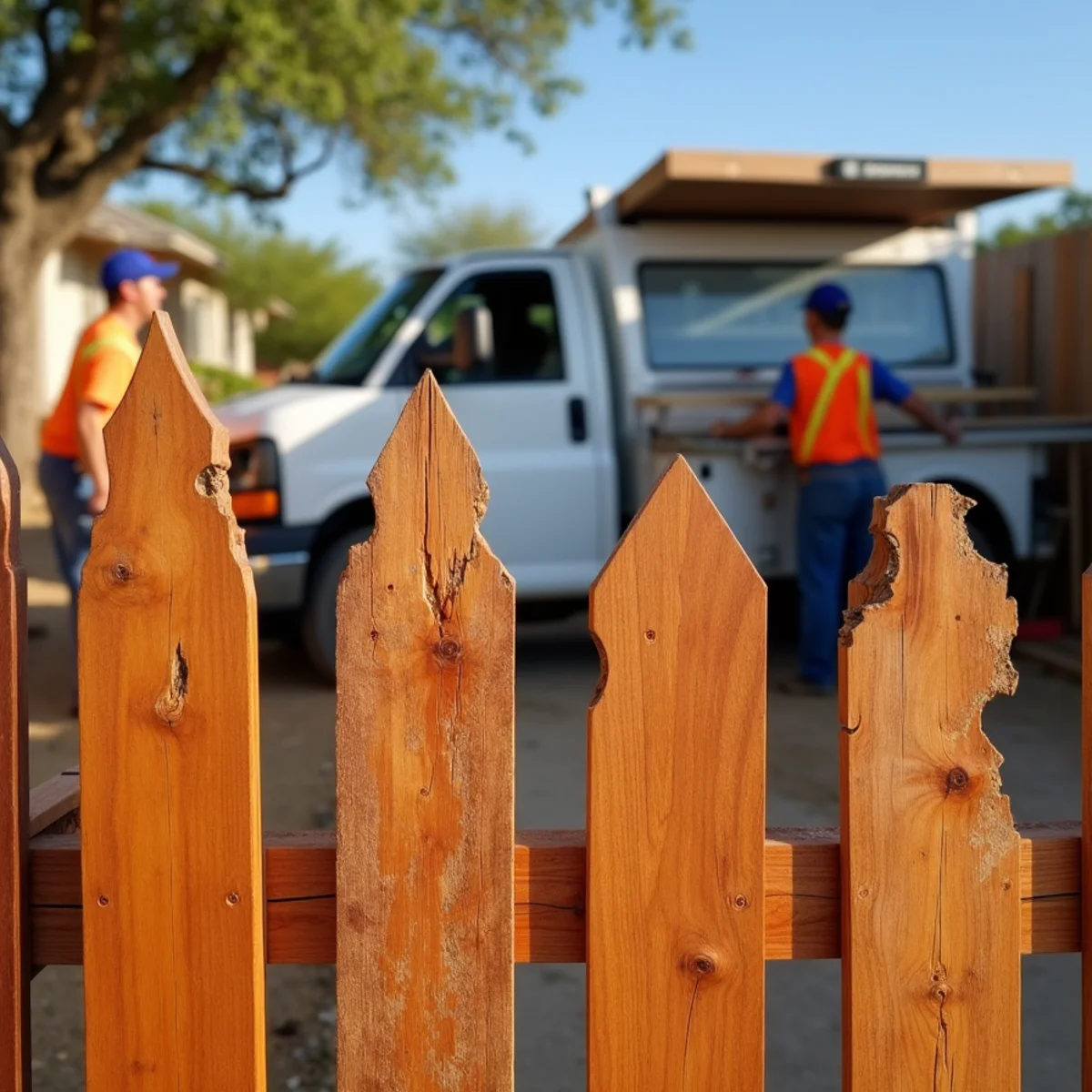
This is where Central Texas sun separates the two materials fastest. Cheap pine pickets are notorious for warping, cupping, and twisting after a season or two of intense heat and wet-dry cycling. As the wood dries unevenly, boards bow out, corners curl, and the once-straight fence takes on a wavy, gap-toothed look. It is one of the most common complaints on budget pine fences here.
Cedar is far more dimensionally stable. It shrinks and moves less as it dries, holding its shape better through the brutal swing between summer drought and spring rain. A cedar picket is much more likely to stay flat and straight over the years than a comparable pine one, which is a large part of why cedar fences keep looking intentional while pine fences often look tired.
Warping is not just cosmetic - twisted pickets pull fasteners, open privacy gaps, and put uneven stress on rails and posts. A fence that warps badly effectively ages its whole structure faster. Cedar's stability is one of the quiet reasons it lasts longer as a system, not just as individual boards.
Visual Aesthetics: Warm Red Grain vs Green Chemical Treatment Tint
New cedar has a warm, reddish-brown grain that looks rich and natural right off the truck, and left untreated it weathers to an elegant silvery gray. Sealed or stained, it holds a warm tone for years. That appearance is a big reason cedar reads as an upgrade and helps a home's curb appeal.
Fresh pressure-treated pine often carries a greenish or olive tint from the treatment chemicals, along with occasional staining and knots. It can be stained over once fully dry, but it rarely achieves cedar's natural warmth, and as pine weathers and warps it tends to look utilitarian rather than refined. For a fence that is a prominent part of the yard, the visual gap is real.
Neither look is wrong - a well-built pine fence is perfectly serviceable and a smart budget choice for back property lines and utility areas. But where the fence is seen from the street or a patio, cedar's appearance is a meaningful part of what you are paying for.
Cost Comparison: Upfront Material Price vs 15-Year Replacement Cycle
Pine wins on upfront price, sometimes substantially - it is the reason builders default to it on spec homes and why a pine quote can undercut cedar noticeably. If first cost is the deciding constraint, quality treated pine on good posts is a legitimate, cost-effective fence.
The picture changes over a full ownership cycle. A budget pine fence that warps and weathers may need significant repair or replacement well before a cedar fence built to the same standard. Cedar's longer service life and better appearance-retention often close or reverse the cost gap over ten to fifteen years, especially once you factor in the labor of replacing failed pickets and re-straightening a warped fence.
The single most cost-effective configuration many Central Texas builders recommend is a hybrid: cedar pickets and rails for the look and longevity you see, on rot-proof steel or ground-contact-rated posts for the part in the clay. That puts the durable materials exactly where each fails and often delivers the best cost-per-year of any option.
- Pine: lower upfront cost, good for back lines and budgets, shorter comfortable lifespan in full sun.
- Cedar: higher upfront cost, better warp and rot resistance, superior looks, longer service life.
- Hybrid: cedar cladding on steel or treated posts often gives the best long-term value.
Why Top-Tier Central Texas Neighborhoods Require Cedar Fencing
In many established and upscale Central Texas subdivisions, cedar is not just preferred - it is required. HOA architectural guidelines frequently specify cedar (and sometimes a particular style, stain, or good-neighbor construction) to keep fencing consistent and protect property values across the neighborhood. Installing pine in one of these communities can mean a rejection from the architectural review committee and a costly do-over.
Even where cedar is not mandated, it tends to be the neighborhood norm in higher-value areas, and a pine fence can stand out as the odd one out. If you are in or near a community with an active HOA, it is worth confirming the fencing requirements before you buy materials - specifics vary by community, so verify with your HOA directly.
We are familiar with the fencing standards across Round Rock, Cedar Park, and surrounding communities and routinely build to HOA cedar specifications. Matching the neighborhood standard the first time avoids the expense and hassle of rebuilding a non-compliant fence.
Request a Custom Cedar Fence Estimate from Oakwood Landscaping
Cedar or pine comes down to your priorities - budget, appearance, longevity, and whether your neighborhood requires a specific material. Oakwood Landscaping builds both, and we will give you an honest comparison for your yard rather than pushing the most expensive option. Where it makes sense, we will recommend the hybrid approach that puts durable materials exactly where fences fail.
For a fence that looks right, meets your HOA's rules, and holds up to Texas sun and clay, talk to a builder who knows both the materials and the local requirements. Call Oakwood Landscaping at (323) 606-0255 for a free cedar fence estimate.
Get Expert Help
Oakwood Landscaping can handle this for you across Round Rock and Central Texas. Explore the services in this guide: