Material Comparison· 7 min read· Updated
Texas Limestone vs Flagstone: Choosing the Best Patio Stone
Texas chopped limestone or flagstone for your patio? A clear comparison of looks, heat retention, slip resistance, durability on clay, and real cost.
By the Oakwood Landscaping team · Reviewed by Emmanuel Heredia Sanchez, Owner & TCEQ Licensed Irrigator
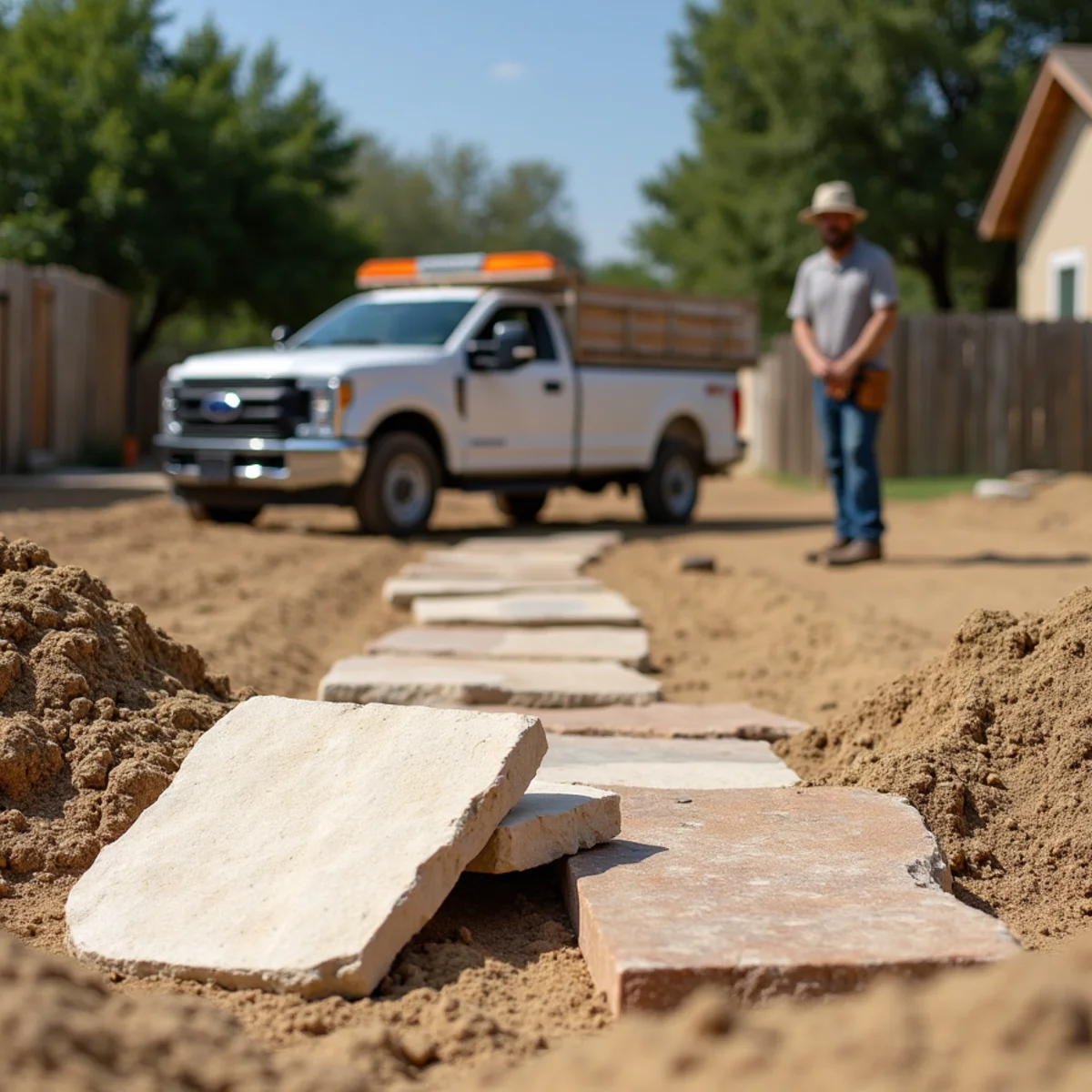
A stone patio is one of the highest-value additions you can make to a Central Texas home, but the choice between cream Texas limestone and richly colored flagstone shapes everything that follows - how the space looks, how hot it gets underfoot in July, how safe it is around a pool, and how well it holds up as the clay beneath it moves. Both are excellent natural stones. They are just suited to different priorities.
This comparison cuts through the showroom talk and looks at the factors that actually matter after installation: appearance, heat retention in our brutal sun, slip resistance around water, durability over expansive Blackland clay, and the cost drivers that make one project pricier than another. The goal is to help you walk into a design conversation knowing which stone fits your yard and your budget.
Aesthetic Variations: Cream Texas Chopped Limestone vs Rich Flagstone
Texas chopped limestone is the pale, warm stone you see all over Hill Country architecture - creams, buffs, and soft tans quarried right here in Central Texas. Chopped or cut limestone tends to read cleaner and more uniform, with squared edges that suit formal patios, defined borders, and a look that ties into limestone homes and retaining walls. It gives a bright, cohesive surface that reflects the regional vernacular.
Flagstone is the broader category of flat sedimentary stone laid in irregular, natural shapes, and it comes in a much wider palette - warm rusts, browns, grays, and multicolor blends depending on the quarry. Flagstone's organic, puzzle-piece layout reads more rustic and natural, blending into planted, informal landscapes. Where limestone says tailored, flagstone says relaxed.
Neither is objectively better looking - it depends on the house and the yard. A modern or Hill Country-style home with limestone accents often looks best with matching chopped limestone, while a shaded, garden-heavy backyard frequently suits the varied tones and irregular joints of flagstone. Seeing full-size samples in your own light, not a showroom's, is the only reliable way to decide.
Thermal Properties: How Much Heat Does Each Stone Retain?
In Central Texas, how hot a patio gets barefoot is a real design factor, not a footnote. Color is the biggest driver: lighter stone reflects more solar radiation and stays cooler underfoot than dark stone, which absorbs and holds heat. This is where cream Texas limestone has a genuine edge - its pale surface runs noticeably cooler in direct summer sun than a dark-toned flagstone will.
Flagstone's heat behavior depends heavily on which flagstone you choose. Lighter buff and tan flagstones stay reasonably comfortable, while deep rust and chocolate tones can get punishingly hot around midday on a full-sun patio. If your patio bakes in afternoon sun and will be used barefoot - especially around a pool - leaning lighter, whether that is limestone or a pale flagstone, pays off every summer.
Shade changes the math. Under a pergola or a mature tree canopy, heat retention matters far less, and you can choose darker, richer stone for its looks without paying for it underfoot. We factor sun exposure into every stone recommendation for exactly this reason.
Slip Resistance Around Swimming Pools and Outdoor Kitchens
Around water, surface texture is a safety issue. Flagstone is naturally cleft, meaning its top surface has a slightly rough, textured finish that grips wet feet well - one reason it is a longtime favorite for pool decks and splash zones. That natural traction is a real advantage where the surface will regularly be wet.
Limestone's slip behavior depends on the finish. A honed or smooth-cut limestone can get slick when wet, while a chopped, brushed, or naturally textured limestone surface offers much better grip. If you want limestone around a pool or an outdoor kitchen where spills happen, specifying a textured finish rather than a polished one is essential - and something we spell out in the plan.
For any wet-use area, we also pay attention to joint layout and drainage so water sheds off the surface rather than pooling. The right stone with the right finish and proper slope is what keeps a beautiful patio from becoming a hazard.
Durability Against Blackland Clay Soil Movement and Settling
The stone itself is rarely what fails on a Central Texas patio - the base is. Blackland clay is expansive: it swells when wet and shrinks in drought, and that constant movement is what cracks, heaves, and unsettles patios that were not built for it. Both limestone and flagstone are durable natural stones, but they respond differently to how they are set.
Flagstone laid in a sand-set or dry-laid method has an advantage on moving soil - individual stones can shift slightly and be reset without cracking, and a flexible base absorbs some clay movement. Mortared-and-slab installations of either stone are more rigid and, if the base is not engineered for expansive clay, are more prone to cracking as the ground moves beneath them.
The honest takeaway is that installation method matters more than stone choice for long-term durability here. A properly prepared, compacted, and drained base - designed for shrink-swell clay - is what determines whether your patio still looks good in ten years. We build the base for the soil first, then choose the setting method that suits the stone and the site.
Cost Differences: Quarry Freight, Material and Masonry Labor
Several factors move the price of a stone patio, and material is only one of them. Because Texas limestone is quarried locally, freight costs are typically lower - a real advantage over stone trucked in from out of state. Flagstone pricing varies widely by type and origin; common local flagstones can be competitive, while premium or imported flagstone with sought-after coloring costs considerably more.
Labor is often the bigger line item than the stone. Irregular flagstone that has to be hand-fitted like a puzzle is more labor-intensive to lay than uniform chopped limestone that sets in a predictable pattern, so a flagstone patio can cost more in installation even when the material is comparable. Mortared work, intricate borders, steps, and integrated features like seat walls or an outdoor kitchen all add labor.
Rather than quote a misleading per-foot figure, we price each patio on its real drivers: square footage, stone selection, base preparation for your soil, setting method, and any built features. Those variables differ enough from yard to yard that an honest estimate has to come from seeing the site.
- Local limestone usually wins on freight cost - it is quarried in Central Texas.
- Hand-fit flagstone is more labor-intensive to lay than uniform chopped limestone.
- Base prep for expansive clay is a real cost and should never be skipped.
- Steps, seat walls, borders, and outdoor kitchens add significantly to labor.
Schedule a Custom Hardscape Consultation with Our Designers
The best patio stone for your home is the one that matches your sun exposure, your use around water, your soil, and your budget - and that decision is easier to make with full-size samples in your own yard than from a brochure. Oakwood Landscaping designs and builds limestone and flagstone patios engineered for Blackland clay, with the base built for how our soil actually moves.
Whether you are drawn to the clean look of cream Texas limestone or the natural character of flagstone, we will help you choose and build it to last. Call Oakwood Landscaping at (323) 606-0255 for a free hardscape consultation and estimate.
Get Expert Help
Oakwood Landscaping can handle this for you across Round Rock and Central Texas. Explore the services in this guide: