DIY vs Pro· 6 min read· Updated
Why Installing a DIY Fence on Blackland Clay Fails Fast
DIY fences on Blackland clay lean and fail within a few years. Here is why - heaving footings, impossible hand-digging, wind load, and easement traps.
By the Oakwood Landscaping team · Reviewed by Emmanuel Heredia Sanchez, Owner & TCEQ Licensed Irrigator
A wood privacy fence looks like the most approachable big DIY project a homeowner can take on - set some posts, hang some panels, done. In sandy or loamy soil, a determined DIYer can pull it off. In the Blackland clay that covers Round Rock, Pflugerville, and Taylor, the same project fails far more often and far faster, because the soil itself is working against the fence every day.
The reasons a DIY fence goes crooked here are specific and physical: expansive clay that heaves footings out of the ground, holes that are nearly impossible to dig to proper depth by hand, posts set without water-shedding details, wind loads that treat a solid fence like a sail, and property-line rules that turn a well-built fence into a legal problem. Understanding them shows why fence building on clay is harder than it looks - and where the money goes when it is done right.
The Power of Clay Expansion: Heaving Shallow Concrete Footings Upward
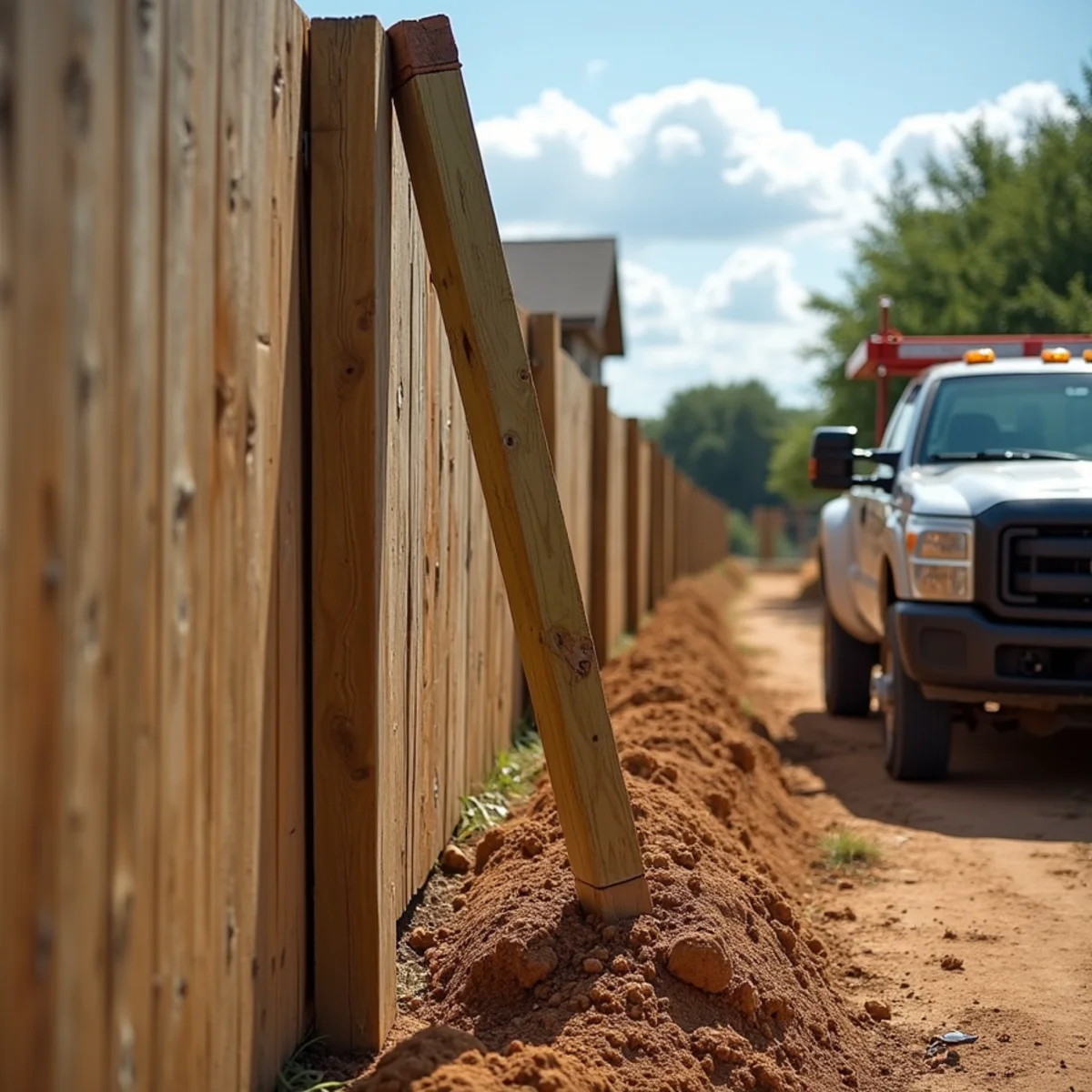
Blackland clay is an expansive montmorillonite vertisol - a soil that swells dramatically when it takes on water and shrinks as it dries. That shrink-swell force is powerful enough to crack home foundations, and it does not spare fence footings. A post footing that does not reach below the active moisture zone gets gripped by the swelling clay and shoved upward, then left loose as the clay shrinks back. Cycle after cycle, the post works its way up and out of plumb.
The result is the leaning, wandering fence line you see all over Central Texas within a few years of a shortcut install. DIYers almost always underestimate how deep a footing has to go to escape this zone, digging a hole just deep enough to stand the post up rather than deep enough to anchor it against clay movement. A footing that would be fine in stable soil is exactly the one clay heaves the fastest.
Beating clay heave requires footings deep enough to reach past the shrink-swell layer and shaped to resist being pushed - details that are easy to describe and hard to execute by hand in the ground we have.
Why Digging 36-Inch Post Holes by Hand in Dry Clay Is Nearly Impossible
Anyone who has tried to hand-dig in Central Texas clay in summer knows the problem: dried Blackland clay sets up nearly as hard as concrete. A hand post-hole digger or clamshell tool bounces off it. Even a two-person auger stalls and skips. Getting a clean, straight, deep hole - the kind a durable footing needs - by hand is a punishing job that most DIYers give up on well before proper depth.
What happens next is the compromise that dooms the fence: the hole ends up too shallow, too wide and sloppy, or dug only when the clay is wet enough to move but too soft to hold shape. Shallow holes heave; sloppy holes waste concrete and leave the post loose; wet-dug holes collapse. None of it produces the tight, deep footing the soil demands.
Professionals reach depth with powered augers and, where limestone rock appears, rock-capable equipment - and they know to dig when conditions allow a clean hole. The equipment and the timing are half the battle, and both are things a weekend project rarely has going for it.
Failing to Set Steel Posts in Concrete Sleeves That Shed Water
How a post is set matters as much as how deep it goes. A common DIY error is pouring concrete that ends flush with or below the ground, creating a little basin that traps water against the post - accelerating rot on a wood post and holding moisture in the footing. The concrete should instead be crowned, sloped up and away from the post so it sheds water like a small roof.
The more durable approach many pros use on clay is to eliminate wood in the ground entirely - setting galvanized steel posts in properly crowned concrete, then cladding the fence in cedar. Steel cannot rot at the soil line, and a crowned footing keeps water moving away rather than pooling. DIY kits rarely include these details, and homeowners rarely know to ask for them.
Skipping the water-shedding detail is one of those invisible shortcuts that looks fine the day the fence goes up and reveals itself two rainy seasons later as a soft, leaning post. It is cheap to do right and expensive to fix wrong.
Wind Load Calculations: How a Solid Wood Fence Acts as a Giant Sail
A solid privacy fence is, aerodynamically, a wall - and Central Texas gets serious wind, including the strong gusts that come with our spring storms. That means every panel catches wind and transfers the force straight into the posts and footings. A fence that is not engineered for wind load acts like a giant sail, and the weakest footing is the first to go, often taking a whole run down with it.
DIY builds routinely under-account for this. Posts spaced too far apart, footings too shallow, and undersized posts add up to a fence that stands fine in calm weather and folds in the first real blow. Combine wind load with clay-loosened footings and you have the exact recipe behind the collapsed fences that show up all over town after a storm front.
Proper spacing, adequately sized and set posts, and sometimes design choices that let a little air through are how a fence survives Central Texas wind. It is engineering, not just carpentry - and it is why a professionally built fence stays up when the DIY one next door is on the ground.
Property Line Disputes: The Nightmare of Building Over Easements
The most expensive DIY fence mistake is not structural - it is legal. Build a fence a foot over the property line and you may be forced to tear it down. Build it across a utility or drainage easement and the utility can remove it without compensation when they need access, leaving you to rebuild at your own cost. Homeowners frequently assume they know where their line is and are wrong.
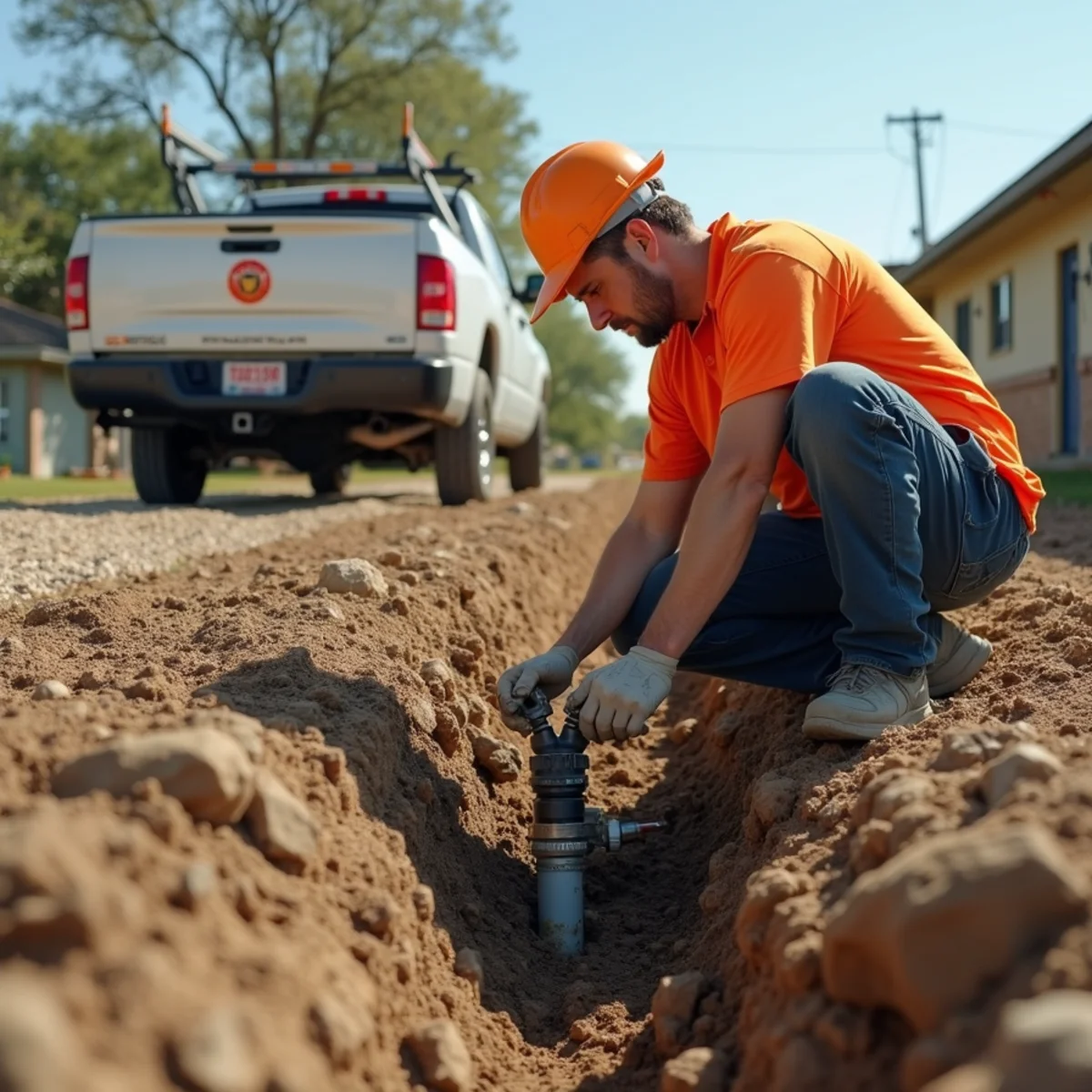
Before any digging, you also must have underground utilities located by calling Texas811, the state's one-call system - it is the law, it is free, and hitting a buried gas, electric, or fiber line while setting a post is both dangerous and potentially very costly. DIYers in a hurry skip this step at real peril.
Setbacks, easements, corner-lot sight lines, and HOA rules all constrain where a fence can legally go, and the specifics vary by jurisdiction and community. Verifying your survey, calling Texas811, and confirming requirements with the City and your HOA before building is not optional - it is what stands between you and a costly do-over.
- Always call Texas811 before digging - it is free, required by law, and prevents dangerous utility strikes.
- Verify your actual property line from a survey, not a guess or an old fence.
- Never build across a utility or drainage easement - it can be removed without compensation.
- Confirm setbacks, sight-triangle rules, and HOA requirements before you start.
Let Oakwood Build a Rock-Solid, Straight Privacy Fence
On Blackland clay, a fence is only as good as its footings and its planning - and both are exactly what DIY builds get wrong. Oakwood Landscaping sets footings deep enough to beat clay heave, uses powered and rock-capable equipment to reach proper depth, crowns every pour to shed water, and builds for Central Texas wind load. We also handle the parts homeowners overlook: calling Texas811, respecting easements and setbacks, and building to HOA specifications.
The result is a straight, solid fence that stays that way. If you want it built once and built right, call Oakwood Landscaping at (323) 606-0255 for a free estimate.
Get Expert Help
Oakwood Landscaping can handle this for you across Round Rock and Central Texas. Explore the services in this guide: