Permits & Compliance· 6 min read· Updated
The Dangers of Digging Without 811 in Williamson County
Digging without calling Texas811 in Williamson County risks gas explosions, cut fiber lines, electrocution, and steep liability. Here is what runs beneath your yard and the law that protects you.
By the Oakwood Landscaping team · Reviewed by Emmanuel Heredia Sanchez, Owner & TCEQ Licensed Irrigator
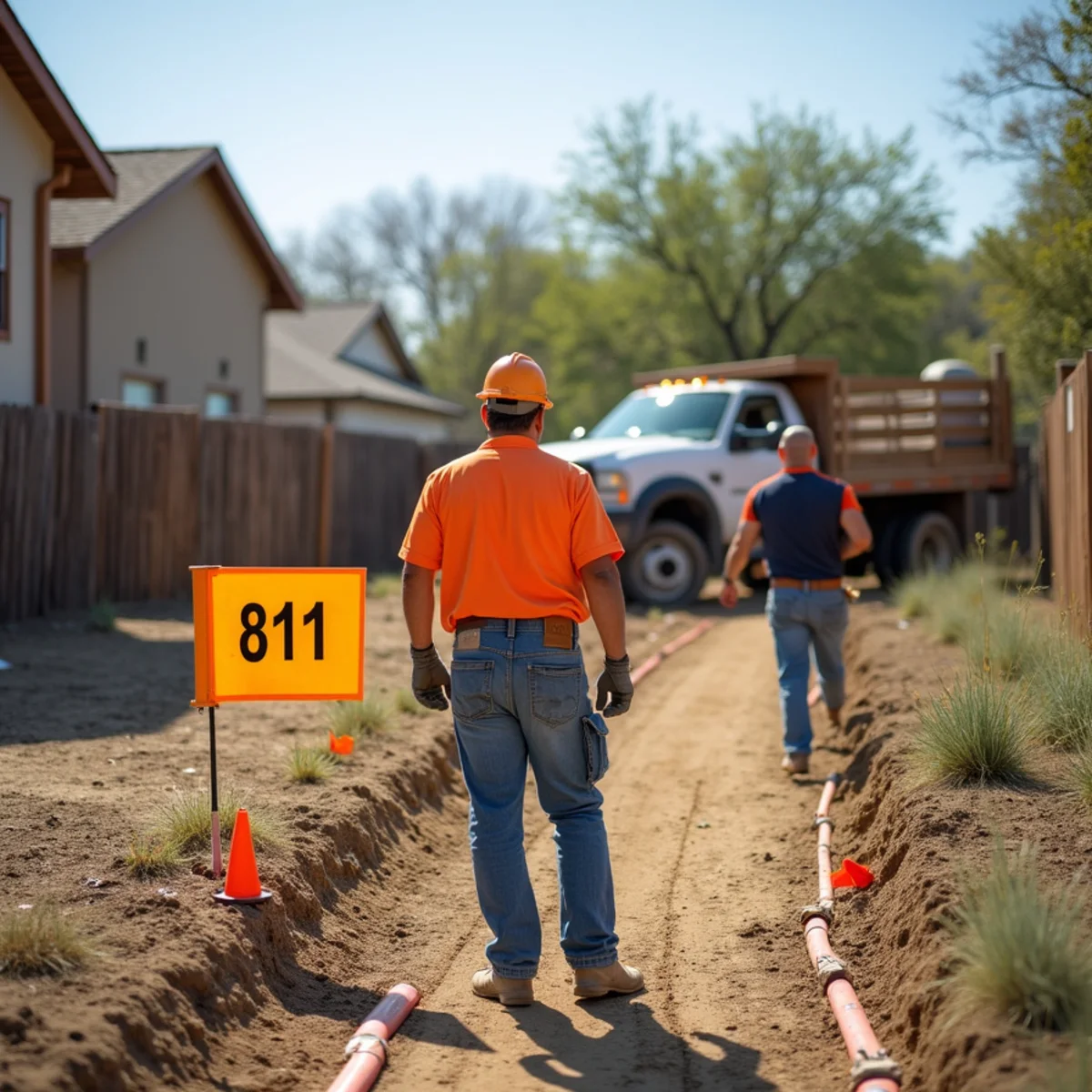
The shovel going into your yard looks harmless. Beneath it, often just inches to a couple of feet down, may run high-pressure natural gas, fiber optic backbone, and live electrical feeds. Every year, homeowners and contractors across Williamson County strike these lines while planting trees, setting fence posts, or trenching for irrigation - and the consequences range from an expensive repair bill to a fatal accident.
Almost all of it is preventable with one free phone call. Texas law requires you to have underground utilities located before you dig, through the Texas811 one-call system. This article covers what is actually buried under a typical yard, the law that governs digging, the financial and safety stakes of ignoring it, and how professional contractors handle utility marking as a routine first step on every job.
What Lies Beneath: High-Pressure Natural Gas, Fiber Optic and Electric Feeds
A typical residential lot in Williamson County is threaded with more infrastructure than most homeowners realize. Natural gas service lines run to the meter and beyond; electric feeds may run underground from the transformer to the house; and communications lines - increasingly fiber optic - carry internet, phone, and TV. Add water and sewer laterals, and the ground under your yard is a crowded place.
Depth is not the safeguard people assume. Utility burial depths vary, and over years of landscaping, regrading, and erosion, a line that was buried at code depth can end up shallower than expected. In Central Texas, where shallow limestone bedrock sometimes forces lines to be laid higher, a shovel or auger can reach a critical line faster than you would ever guess.
The point is simple: you cannot know what is down there or how deep by looking. The only reliable way to find out is to have the lines professionally located before the first hole is dug.
Texas Underground Facility Damage Prevention Law (Texas 811)
Texas has a damage-prevention law built around the Texas811 one-call notification system. Before excavation, you are required to notify Texas811, which coordinates with the utility operators in your area to come mark the approximate location of their buried lines - free of charge to you. You call (or submit online) a set number of business days before you dig, wait for the lines to be marked, and then dig carefully around them.
This applies to homeowners, not just contractors, and to far more projects than people think - fence posts, tree and shrub planting, deck footings, irrigation trenches, retaining wall excavation, and drainage work all qualify as digging that warrants a locate. The marks are color-coded by utility type and are good for a limited window, so timing your call to your dig matters.
The system exists precisely because guessing is so dangerous. Calling Texas811 is the single most important safety step in any excavation, and it is both free and legally required. Skipping it is not a gray area.
- Notify Texas811 the required number of business days before digging - by phone or online.
- Wait for all utilities to mark their lines before breaking ground.
- Respect the color-coded marks and dig carefully by hand near them.
- Applies to homeowners too - fence posts, tree planting, trenching, and more all count.
Financial Liabilities: Massive Repair Bills and Civil Penalties
Cutting a utility line you were supposed to have located is expensive in ways that go well beyond fixing the line. If you damage a fiber optic backbone, you can be liable not just for the physical repair but for the service disruption to everyone downstream - a bill that can reach staggering sums for a severed main. Gas and electric repairs carry their own significant costs, plus emergency response.
On top of repair costs, damaging a facility after failing to notify Texas811 can expose you to civil penalties under the state's damage-prevention rules. What started as a free phone call you skipped becomes a liability that can dwarf the entire cost of your landscaping project many times over. Insurance may not cover damage that resulted from failing to follow the law.
The math is lopsided: the call costs nothing, and the strike can cost more than a car. There is no version of the DIY savings that survives one bad hit on a buried line.
Life-Threatening Hazards of Striking Buried Electrical Conduits
Beyond money, the real reason this law exists is that people die hitting buried lines. Striking a live electrical conduit with a metal shovel, auger, or trenching blade can cause electrocution - the current has a direct path through the tool and into the person holding it. Even a near miss on an energized line is a serious hazard.
Natural gas is the other lethal danger. Nicking a gas line releases gas that can ignite from a spark, a nearby pilot light, or the equipment itself, causing fires and explosions that endanger not just the person digging but the whole household and neighbors. Gas leaks also displace oxygen and pose an asphyxiation risk in confined excavations.
These are not remote hypotheticals - they are exactly the outcomes the one-call system is designed to prevent. No fence, tree, or sprinkler line is worth risking a life over a call that takes minutes and costs nothing.
How Professional Contractors Coordinate Utility Markings Safely
For a professional landscaping and irrigation contractor, calling Texas811 is not an afterthought - it is a standard, non-negotiable first step written into how every excavation job runs. We submit the locate request, wait the required period for all operators to mark their lines, and plan the work around what the marks reveal, adjusting fence lines, trench routes, and planting locations to keep clear of buried facilities.
Professionals also know how to work safely around marks once they are down - hand-digging to expose lines where necessary, treating the marks as approximate rather than exact, and knowing which situations call for extra caution. That experience is part of what you are paying for: excavation that gets the job done without turning your yard into a hazard.
It also protects you legally. When a licensed, insured contractor handles the locate and the digging, the responsibility and the expertise for doing it correctly rest with people who do it every week.
Trust Code-Compliant Hardscape and Irrigation Excavation with Oakwood
Any project that puts a blade in the ground - drainage, irrigation, fence footings, retaining walls - starts with a Texas811 locate on an Oakwood job, every time. We are licensed, insured, and BBB accredited, and we handle the utility coordination and safe excavation so you never have to gamble on what is buried under your yard.
Do not risk a strike to save a phone call. For code-compliant, professionally located excavation across Williamson County, call Oakwood Landscaping at (323) 606-0255 for a free estimate.
Get Expert Help
Oakwood Landscaping can handle this for you across Round Rock and Central Texas. Explore the services in this guide: