Problem & Diagnosis· 6 min read· Updated
How to Water Your Foundation in Blackland Clay
A practical guide to foundation watering in Blackland clay: how a soaker or drip system keeps soil moisture steady, when and how long to run it, and how to protect your slab in drought.
By the Oakwood Landscaping team · Reviewed by Emmanuel Heredia Sanchez, Owner & TCEQ Licensed Irrigator

Watering your foundation in Blackland clay means keeping the soil around your slab at a steady, moderate moisture level so it does not shrink away from the house in drought and then swell back when the rain returns. That cycle of shrinking and swelling is what cracks slabs in Central Texas, and the fix is consistency: a soaker hose or drip line run 12 to 18 inches out from the foundation, on a regular schedule, so the soil never dries out and pulls back. The goal is stable moisture, not soaking - overwatering causes its own problems.
Blackland clay is one of the most expansive soils in the country. It can swell noticeably when saturated and shrink and crack open when it dries, and a home's slab rides on top of that movement. During a hot, dry Central Texas summer, the soil around the perimeter dries and contracts fastest, leaving the edges of the foundation unsupported while the center stays put - and that differential is where cracks start.
This guide explains how foundation watering works, how to set up a soaker or drip system, when and how long to run it, and how to protect your slab through drought and watering restrictions. For a properly zoned system that handles this automatically, call Oakwood at (323) 606-0255.
Why Blackland Clay Threatens Your Foundation
Blackland clay is defined by its shrink-swell behavior. The clay minerals absorb water and expand, then release it and contract, and in this region that swing can move soil enough to lift, drop, and crack a concrete slab. Foundations here are not fighting weak soil - they are fighting soil that changes volume with the weather.
The damage comes from uneven moisture, not moisture itself. In summer, the exposed perimeter soil dries and shrinks first while soil under the center of the slab stays more stable, so the edges settle and the slab flexes. Then a big rain re-saturates the edges and they heave back up. Repeated over seasons, that flexing shows up as cracked drywall, sticking doors, and separations. Steady soil moisture around the perimeter is what prevents the swing - which is the entire point of foundation watering.
Soaker Hoses vs. Drip Lines: Setting It Up
The two practical tools for foundation watering are soaker hoses and dedicated drip lines. Both deliver water slowly and evenly along the perimeter, which is exactly what clay needs - a slow soak penetrates rather than running off the way a sprinkler blast does. The right placement matters more than the tool.
- Place the hose or drip line 12 to 18 inches out from the foundation, not right against it - you want to keep the soil that supports the slab edge moist, not flood the base.
- Run the line around the full perimeter, including the sides that get the most sun and dry fastest.
- Use a slow, low-pressure flow so water soaks in deep rather than pooling or running off the hard clay surface.
- A drip line on a dedicated irrigation zone with a timer gives the most consistent results and can run automatically within watering rules.
- Aim for damp, not soggy - the soil should feel like a wrung-out sponge, never muddy or standing in water.
Timing and How Much to Water
Consistency beats volume. The aim is to keep perimeter moisture steady, so shorter, more frequent watering in dry stretches works better than occasional deep flooding that swings the soil the other way. In a typical hot, dry summer week with no rain, many Central Texas homeowners run a foundation soaker for a moderate period several times a week - but the exact schedule depends on your soil, exposure, and how dry conditions are. Watch the soil and the gap between soil and slab rather than following a rigid clock.
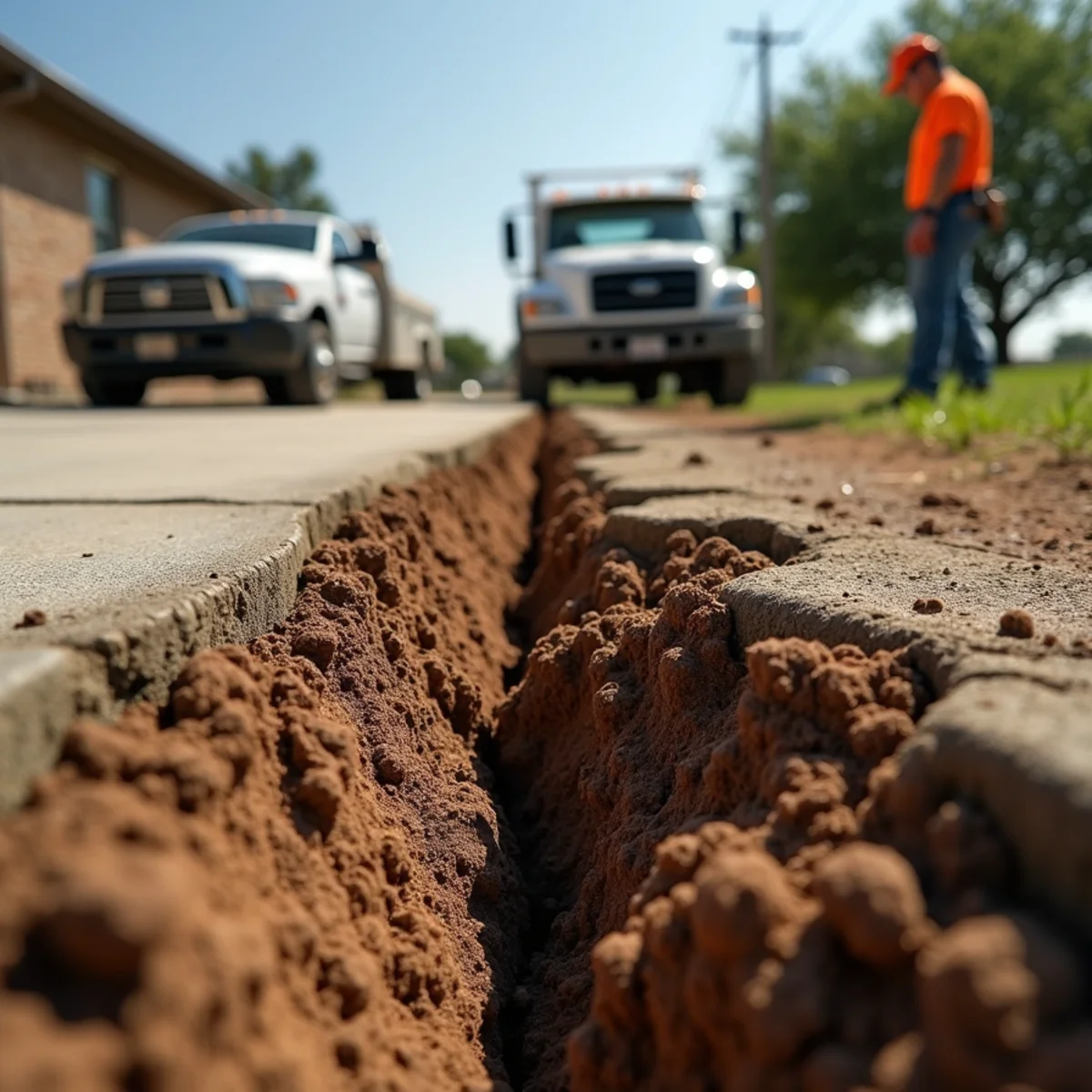
A telltale sign you have fallen behind is a visible gap opening between the soil and the foundation - when you can see the clay pulling away, the perimeter has dried and contracted. Start watering before that happens, not after. On the flip side, if the ground stays soggy or water pools against the house, you are overwatering, which can be as damaging as too little by keeping the soil unstable and stressing drainage. During and after heavy rain, stop - the soil is already saturated, and adding water does harm.
Protecting Your Slab During Drought and Restrictions
Drought is when foundation watering matters most and also when watering restrictions tighten. Round Rock limits landscape watering to before 10 a.m. or after 7 p.m. on designated days, and drought stages can restrict it further. Foundation watering with a soaker or drip system generally falls under efficient methods, but always confirm what is allowed under the current stage, and schedule your foundation watering within the permitted windows.
A few habits protect the slab beyond watering. Keep large trees and their thirsty roots away from the foundation, since they pull moisture from the soil and worsen drying on that side. Make sure gutters and grading carry roof runoff away from the house so you are not soaking one side while another dries. And keep the watering even all the way around - a foundation watered on only one or two sides can crack from the imbalance just as it would from drought. The most reliable solution is a dedicated drip zone on a smart controller that maintains steady moisture automatically, even when you are away.
Common Foundation-Watering Mistakes to Avoid
Foundation watering is simple in principle but easy to get wrong, and the mistakes tend to cause the exact damage you are trying to prevent. The goal is steady, even moisture - and most errors come from being either inconsistent or uneven.
The pitfalls to watch for:
- Watering only during obvious droughts: consistency year-round matters more than heavy watering during a crisis, because it is the swing between wet and dry that cracks slabs.
- Watering only one or two sides: uneven moisture around the perimeter can crack a foundation just as drought does. Keep all sides balanced.
- Placing the hose against the slab: flooding the base does not help the supporting soil and can cause its own problems; keep the line 12 to 18 inches out.
- Overwatering: soggy, unstable soil and pooling water are as harmful as drying. Aim for damp, not muddy, and stop during and after heavy rain.
- Forgetting drainage: soaking the soil while gutters dump roof runoff against the house works against you; grading and drainage have to complement the watering.
Protect Your Foundation With Oakwood Landscaping
Consistent foundation watering is one of the cheapest forms of insurance a Central Texas homeowner can buy, but doing it by hand is easy to neglect. Oakwood Landscaping installs dedicated drip and soaker zones sized for your foundation, tied into a smart controller that keeps perimeter moisture steady within Round Rock's watering rules.
As a TCEQ Licensed Irrigator, we also address the drainage and grading that work alongside foundation watering to keep soil moisture balanced. Call (323) 606-0255 to set up a foundation watering system that protects your slab through drought and clay movement.
Get Expert Help
Oakwood Landscaping can handle this for you across Round Rock and Central Texas. Explore the services in this guide: