Problem & Diagnosis· 7 min read· Updated
The Shrink-Swell Beast: How Blackland Clay Destroys Foundations
An expert look at how expansive Blackland clay swells and shrinks with moisture to crack Central Texas foundations, and how drainage and drip watering protect your slab.
By the Oakwood Landscaping team · Reviewed by Emmanuel Heredia Sanchez, Owner & TCEQ Licensed Irrigator
Homeowners across the Austin metro share a problem that has nothing to do with the age or quality of their house: the ground it sits on. Blackland clay is some of the most expansive soil in North America, and it is in constant, seasonal motion. That movement is the hidden force behind cracked slabs, sticking doors, and split drywall throughout the region.
The frustrating part is that the house did not do anything wrong. The soil swells when it gets wet and shrinks when it dries, and it does this unevenly around the foundation, lifting one area while another settles. Over years, that differential movement is what damages the structure.
This article explains the science in plain terms: what makes this clay behave the way it does, how drought and downpours pull the soil in opposite directions, why uneven moisture is the real enemy, and how thoughtful drainage and watering keep the soil, and your foundation, stable. Understanding the beast is the first step to managing it.
The Unique Mineral Structure of Montmorillonite Vertisol Clay
Blackland clay is a vertisol, and its defining ingredient is a clay mineral called montmorillonite. What makes this mineral so active is its structure: its microscopic layers can absorb water molecules directly between them, causing the clay particles themselves to swell. When the water leaves, the layers collapse back and the clay shrinks. This is not surface wetness; it is the soil physically changing volume.
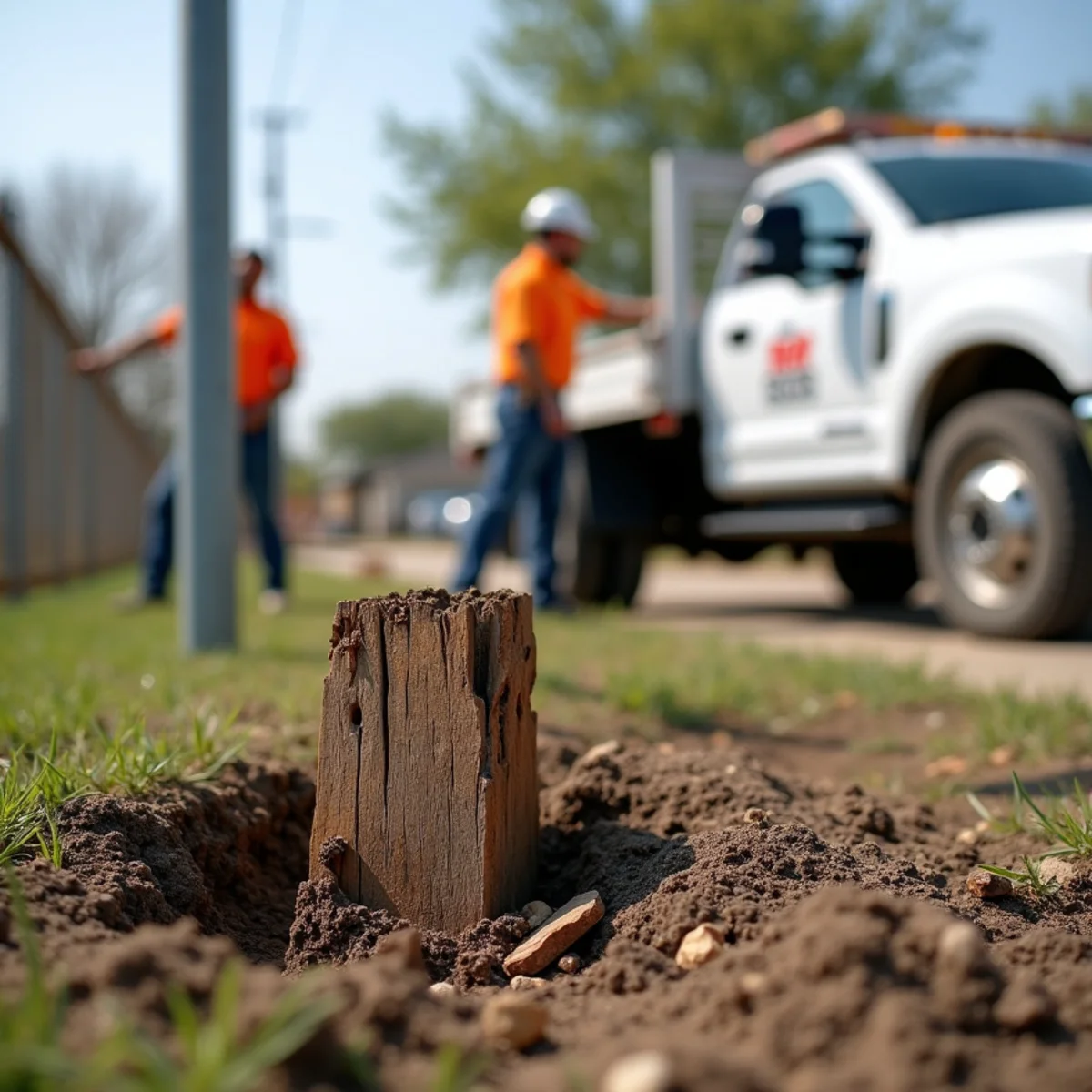
The scale of that volume change is what sets expansive clay apart from ordinary soil. A vertisol can swell and shrink enough to visibly move sidewalks, crack slabs, and shift fence posts, and the deep cracks that open in a dry summer are the same soil that will bulge and heave after a heavy rain. The soil is essentially breathing with the seasons.
This is why the region's foundation issues are so widespread and so consistent. It is not a construction defect or bad luck; it is the fundamental nature of the ground. Recognizing that the soil is the active agent, and the foundation is the thing being acted upon, is the key to protecting the house.
How Summer Drought Causes Deep Fissures and Soil Contraction
Through the brutal heat of a Central Texas July and August, the clay dries and shrinks, and it does so from the outside in. The soil at the edges of your foundation, exposed to sun and wind and drawn on by tree roots, dries fastest, contracting and pulling away from the slab while the soil deeper under the center stays moister.
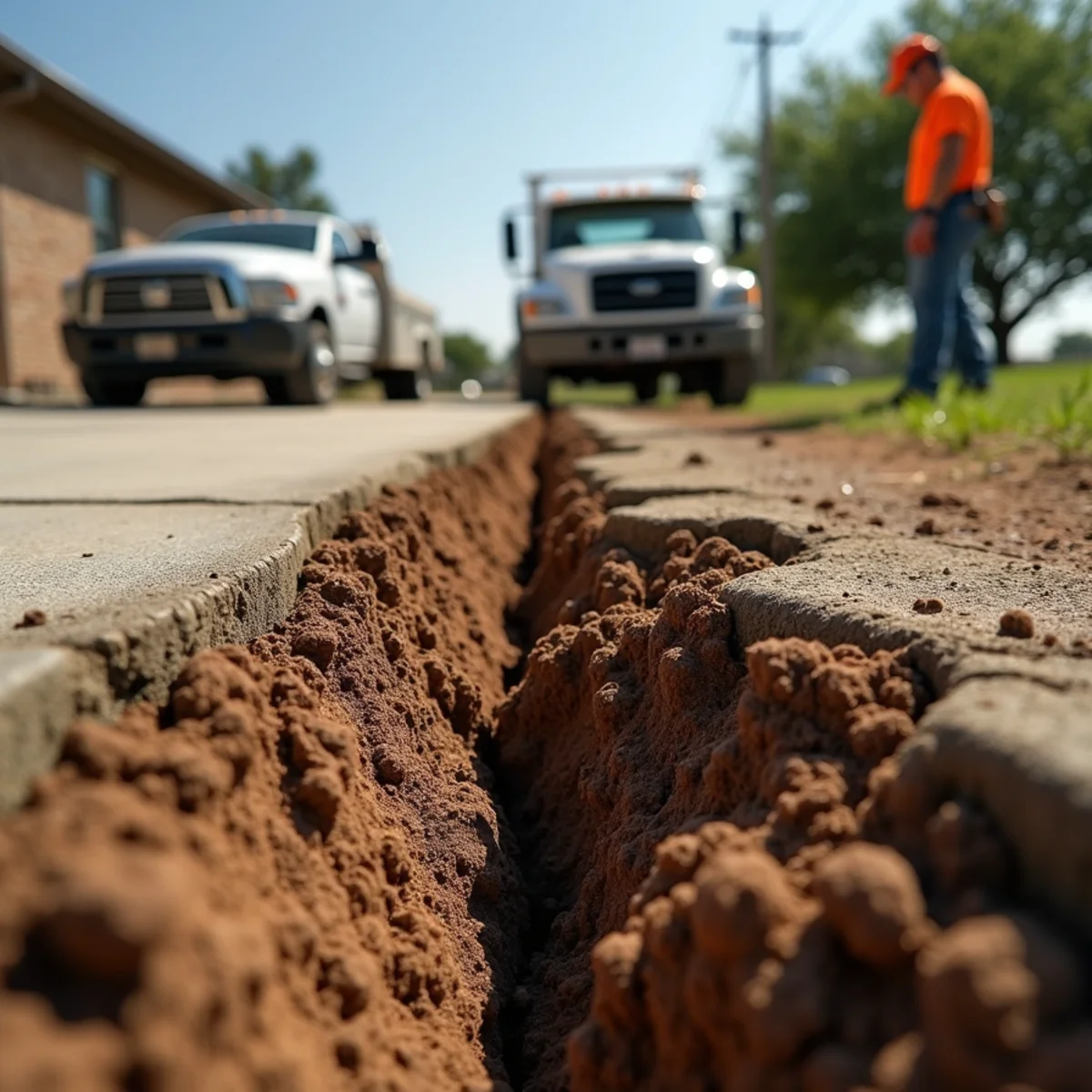
You can see the evidence in the deep fissures that open across bare clay yards in late summer, cracks wide enough to swallow a hand. Those same fissures are forming under and around your foundation, and as the perimeter soil shrinks, the edges of the slab lose their support and can settle downward while the center stays put.
This is the drought half of the cycle, and it is why watering habits matter so much in summer. Soil that is allowed to dry out completely at the foundation edge sets up the exact settling that cracks slabs. The goal in summer is not to flood the soil but to keep it from swinging to the dry extreme.
How Torrential Downpours Cause Massive Soil Expansion and Heave
Then the rains come. A heavy Central Texas storm dumps water onto that cracked, dried-out clay, and the soil drinks it in and swells rapidly. The perimeter that had shrunk away from the foundation now expands, and if the water pools unevenly, one side of the house can swell and heave upward while another stays lower.
This is the opposite failure mode from summer settling, and it is just as damaging. Where drought causes edges to drop, a downpour after drought can cause them to lift, and the foundation is caught between the two. The faster and more uneven the wetting, the more violent the movement, which is why flash floods that saturate one side of a house are so hard on the slab.
The whiplash between these extremes is the real destroyer. A foundation might tolerate slow, even movement, but the repeated, uneven swing from deeply dry to suddenly saturated is what opens cracks and separates finishes. Managing the moisture swing is the whole game.
Why Uneven Moisture Around Slabs Causes Costly Foundation Cracking
The single most important concept in protecting a foundation on this soil is that even moisture matters more than any particular amount. A slab can handle soil that is uniformly moist or uniformly dry far better than it can handle one side wet and the other dry. It is the difference in movement from one point to another, called differential movement, that causes cracking.
Uneven moisture comes from predictable sources: a downspout dumping water at one corner, a flower bed watered heavily on one side while the other bakes, large trees pulling moisture from one edge, or a yard that grades so rain pools against half the house. Each of these creates a wet zone next to a dry zone, and the boundary between them is where the soil, and the slab, is stressed.
This reframes foundation care as moisture management around the perimeter. The aim is to keep the soil all the way around the house at a similar, stable moisture level year-round, neither letting it dry to fissures in summer nor letting storm water pond against one side. Do that, and you take much of the force out of the shrink-swell beast.
- Differential movement, not total movement, cracks slabs.
- Downspouts dumping at one corner create uneven wetting.
- Heavy one-sided bed watering leaves the other side dry.
- Large trees draw moisture from the nearest foundation edge.
- Poor grading ponds storm water against part of the house.
Installing Foundation Soaker Hoses and Dedicated Drip Watering Zones
The practical tools for even perimeter moisture are foundation watering systems. A soaker hose or, better, a dedicated drip irrigation zone run a set distance out from the foundation delivers slow, even water all the way around the house. In dry spells, running it on a light, consistent schedule keeps the perimeter soil from contracting and pulling away from the slab.
The emphasis is on consistency and evenness, not volume. The goal is a stable, moderate moisture level maintained steadily, not periodic soakings that swing the soil from dry to wet. A dedicated drip zone on a smart controller can maintain that balance automatically and adjust for weather, which is far more reliable than remembering to drag a hose out in August.
Drainage is the other half of the same job. Keeping storm water from ponding against the foundation, through grading, gutters, and French drains, prevents the sudden one-sided swelling that a downpour causes. Even watering to prevent the dry extreme and good drainage to prevent the wet extreme work together to keep the perimeter soil stable.
Get an Expert Soil Drainage and Moisture Assessment from Oakwood
Because every lot grades differently and every house has its own downspouts, trees, and beds, the right foundation-protection plan is specific to your property. An assessment looks at how water moves around your house, where the soil is drying or pooling unevenly, and what combination of drainage and dedicated watering will keep the perimeter stable.
Oakwood Landscaping is BBB Accredited, licensed, and insured, and owner Emmanuel Heredia Sanchez is a TCEQ Licensed Irrigator, so we design foundation watering and drainage as an integrated system built for our expansive clay. We can install foundation drip zones, correct grading, and add French drains where water needs a path away from the house.
If you are seeing cracks, sticking doors, or a yard that swings from fissured to flooded, call Oakwood Landscaping at (323) 606-0255 for an expert soil drainage and moisture assessment. Managing the moisture around your slab is far cheaper than repairing a foundation the beast has already moved.
Get Expert Help
Oakwood Landscaping can handle this for you across Round Rock and Central Texas. Explore the services in this guide: