Emergency· 6 min read· Updated
Hard Freeze Pipe Burst: Protecting Your Backflow Assembly
How to protect your irrigation backflow assembly from hard Texas freezes, what insulation actually works at 15F, and how freeze damage is repaired.
By the Oakwood Landscaping team · Reviewed by Emmanuel Heredia Sanchez, Owner & TCEQ Licensed Irrigator
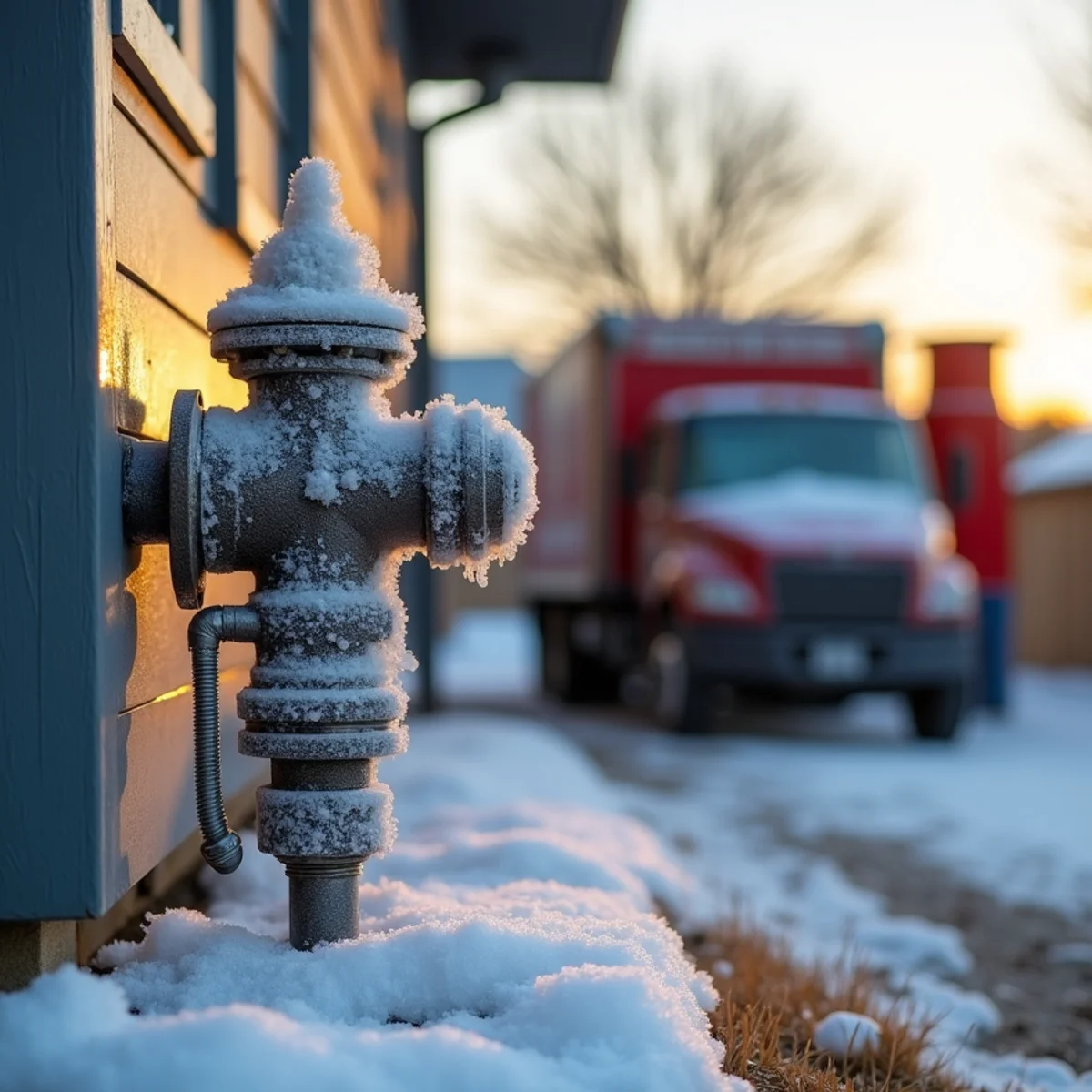
Texas winters are mild until, without much warning, they are not. A few times each winter, Arctic air pushes far enough south to send Central Texas well below freezing, and the exposed component most likely to fail is the one that sticks up out of the ground: your irrigation backflow assembly. When it freezes, it cracks, and when it cracks, it floods.
Winter Storm Uri in February 2021 was the extreme reminder. Days of sub-freezing temperatures shattered backflow preventers, split copper and brass, and burst pipes across the region on a scale nobody was prepared for. Even a routine hard freeze can do the same to an unprotected assembly.
This guide explains how freeze damage happens, how to properly winterize and drain your backflow, what insulation actually holds up when the temperature drops to 15 degrees, and how a licensed irrigator diagnoses and repairs the damage. A little preparation before the cold arrives saves a great deal of water, money, and hassle.
The Legacy of Winter Storm Uri: How Sub-Freezing Air Shatters Copper Valves
Water expands as it freezes, and that expansion is relentless. When water trapped inside a backflow assembly or pipe freezes, it pushes outward with enough force to crack brass castings, split copper, and shatter the plastic and metal bodies of valves. The failure often is not visible until the thaw, when the cracked component starts pouring water.
Winter Storm Uri drove this home for the whole region. The prolonged, deep cold froze assemblies that had shrugged off ordinary Texas winters for years, and the damage showed up everywhere as the ice melted. It reset expectations: freeze protection here is not optional, because the extreme cold event, though rare, is now clearly on the table.
The backflow assembly is uniquely vulnerable because it sits above ground, exposed to the air on all sides, and it holds water. Buried pipe is insulated by the soil, but the assembly has no such protection unless you provide it. That is why it is the first thing to freeze and the most common freeze failure we repair.
Step-by-Step Guide to Winterizing and Draining Your PVB/RPZ Assembly
The most reliable freeze protection is to remove the water the freeze can act on. Most residential systems use a pressure vacuum breaker (PVB) or a reduced pressure zone (RPZ) assembly, and both can be drained ahead of a freeze. The general process is straightforward once you know your valves, though the exact steps vary by assembly type.
Start by shutting off the water to the irrigation system at the isolation valve, then relieve the pressure and open the test cocks and bleed valves on the assembly to let the trapped water drain out. Running the system briefly to clear the lines, or having it blown out with air, removes water from the pipes as well. With the water gone, the freeze has nothing to expand.
If you are not comfortable identifying the valves and test cocks on your assembly, that is a good reason to have it winterized professionally the first time so you can see how it is done. Doing it wrong, such as leaving a valve closed with water trapped between it and another closure, can actually cause the very crack you are trying to prevent.
- Shut off water to the irrigation system at the isolation valve.
- Relieve system pressure before opening anything.
- Open the test cocks and bleed valves to drain trapped water.
- Clear the lines so no standing water remains to freeze.
- Cover the drained assembly for added protection.
Insulated Pouches vs Heat Tape: What Actually Works at 15F?
For a light overnight freeze, insulation buys protection by slowing heat loss. Insulated backflow covers and pouches, or wrapping the assembly with foam pipe insulation and a waterproof outer layer, work well when the cold is brief and not too deep. The key is covering the whole assembly and its exposed pipe, not just draping something over the top.
The honest limit is that insulation only slows the loss of heat; it does not add any. In a short, mild freeze that is enough. In a hard, sustained freeze down around 15 degrees or lower, especially over multiple days, insulation alone can be overwhelmed and the water inside will still freeze. That is the scenario where draining the assembly is the only sure protection.
Heat tape and heat cable add actual warmth and can protect an assembly through harder cold, but they require power, must be rated for outdoor and wet use, and have to be installed correctly to be safe. For most homeowners, the reliable combination is to drain the assembly ahead of a serious freeze and use insulation as backup, rather than trusting insulation alone against 15-degree air.
Diagnosing Cracked Brass Castings and Blown Relief Valves
After a freeze, the damage often hides until the water is turned back on. The most common signs are water spraying or seeping from the assembly, a visible crack in the brass or plastic body, or the relief valve on an RPZ dumping water continuously. Sometimes a hairline crack only weeps under pressure, so a careful inspection means pressurizing the system and watching closely.
Freeze damage tends to concentrate at the assembly body and its castings, where trapped water had room to expand, and at the relief valve, whose internal components are delicate. A blown relief valve or a cracked casting cannot be patched reliably; the affected parts, and often the whole assembly, need proper replacement to restore both function and backflow protection.
Because the backflow preventer protects your drinking water, a compromised one is not just a leak; it is a code and safety issue. Texas requires these assemblies to be functional and tested annually, so a freeze-damaged unit must be properly repaired or replaced and then re-tested, not simply nursed along.
Emergency Thawing and Replacement Protocols
If your assembly is frozen but you are not yet sure it has cracked, thaw it gently. Let it warm naturally as temperatures rise, or apply gentle warmth such as warm towels; never use an open flame or high-heat torch on a backflow assembly, which can damage seals and components and create a hazard. Once thawed, pressurize carefully and inspect for leaks before leaving the system on.
If a component is clearly cracked, shut off the water to the irrigation system and leave it off until the repair, so you are not flooding the yard or wasting water every time it thaws. A cracked assembly left in service can pour water and, if it is near the house, contribute to the same foundation-soaking problems as any other leak.
Replacement of a backflow assembly should be done by a licensed professional and matched correctly to your system and local code. It is not a generic hardware swap; the assembly type, size, and installation all have to meet the requirements that keep your drinking water safe, which is why this is licensed work.
Call Oakwood Landscaping for Licensed Backflow Freeze Repairs
Freeze protection and freeze repair are both areas where the license matters. The backflow assembly is the barrier between your lawn water and your drinking water, and both winterizing it correctly and repairing it to code call for someone who does this work properly and can perform the required annual backflow testing.
Oakwood Landscaping is owned by Emmanuel Heredia Sanchez, a TCEQ Licensed Irrigator, and we are BBB Accredited, licensed, and insured. We winterize systems ahead of hard freezes, diagnose and replace freeze-damaged assemblies, and handle the backflow testing and certification that Texas requires under its irrigation rules. We fix it right and document it.
Whether you want your system winterized before the next Arctic front or you have a cracked assembly that needs repair now, call Oakwood Landscaping at (323) 606-0255. Getting ahead of the freeze, or getting a proper repair after one, protects your water, your bill, and your home.
Get Expert Help
Oakwood Landscaping can handle this for you across Round Rock and Central Texas. Explore the services in this guide: