Design & Ideas· 5 min read· Updated
Backyard Outdoor Living Ideas for Round Rock, TX
Outdoor living ideas for Round Rock backyards, from flagstone patios and cedar pergolas to limestone fire features and shade built for Central Texas heat.
By the Oakwood Landscaping team · Reviewed by Emmanuel Heredia Sanchez, Owner & TCEQ Licensed Irrigator

The best outdoor living ideas for a Round Rock backyard start with shade and hardscape that handle our heat: a flagstone or limestone patio, a cedar pergola or covered structure for relief from the sun, a fire feature for the mild winters, and low-water native beds that frame it all. Built with local stone and heat-tolerant materials, these spaces extend your usable living area for most of the year.
Central Texas rewards outdoor living more than almost anywhere - long warm seasons, plenty of sun, and mild winters mean a well-designed backyard gets used far beyond summer. The trick is designing for our specific conditions: brutal afternoon sun, expansive clay soil that moves under poorly built patios, and native limestone that ties a yard to the Hill Country landscape.
Here are the ideas that consistently transform Round Rock backyards, along with the construction realities - like why a patio needs the right base in clay - that determine whether they last. Use them to build a space that works with the climate instead of fighting it.
1. A Flagstone or Limestone Patio as the Foundation
Every great outdoor living space starts with a solid, comfortable surface, and in Central Texas that usually means natural stone. Flagstone and locally quarried limestone are the signature materials here - they suit the Hill Country aesthetic, stay cooler underfoot than dark pavers, and age beautifully. A stone patio becomes the anchor everything else builds around.
The catch is what is underneath. Blackland clay swells and shrinks dramatically with moisture, and a patio set on poorly prepared clay will heave, crack, and go uneven within a few seasons. A patio built to last needs a properly compacted and drained base that accommodates soil movement - the part you never see is what determines whether the part you enjoy stays flat. This is where do-it-yourself stone patios most often fail in our region.
There is also a choice between set-in-mortar flagstone and dry-laid stone on a compacted base. Mortared flagstone over a concrete slab gives the most rigid, formal surface but is less forgiving of clay movement if the slab is not built for it. Dry-laid stone flexes slightly with the soil and is easier to repair, but needs disciplined edging to stay tight. Neither is universally better - the right call depends on your soil, budget, and how formal you want the finished space to feel.
2-4. Shade Structures, Fire Features, and Outdoor Kitchens
Once you have a surface, these three additions do the most to make a backyard genuinely livable across the seasons.
- 2. Cedar pergola or covered patio - shade is non-negotiable in Central Texas. A cedar pergola adds structure and dappled shade, while a solid roof or louvered cover makes a space usable through the worst July afternoons. Cedar naturally resists rot and weathers to a handsome silver-gray.
- 3. Fire pit or fireplace - our mild winters and cool spring and fall evenings make fire features one of the highest-value additions. A limestone fire pit or built-in fireplace turns a patio into a year-round gathering spot and pairs naturally with local stone.
- 4. Outdoor kitchen or grilling station - from a simple built-in grill counter to a full kitchen with stone counters and a bar, cooking outside keeps heat out of the house in summer and makes entertaining effortless. Limestone or stucco-clad bases tie it into the hardscape.
5-7. Retaining Walls, Water-Wise Beds, and Landscape Lighting
These ideas handle sloped lots, cut maintenance, and extend the hours you can enjoy the space - the finishing moves that make a backyard feel designed rather than assembled. On many area lots they are not optional extras but the very things that make the yard usable in the first place.
- 5. Limestone retaining walls and terraces - on the sloped lots common around Round Rock and the Hill Country, terraced limestone walls create flat, usable areas, control erosion, and double as built-in seating. They turn an unusable slope into a series of outdoor rooms.
- 6. Native, drought-tolerant planting beds - frame the hardscape with Texas Sage, salvia, Red Yucca, and ornamental grasses. They provide color and softness with minimal water and no constant upkeep, so the yard looks lush without a big water bill.
- 7. Landscape lighting - low-voltage path, uplighting on trees and stone walls, and string lights over a pergola extend usable hours into the evening and highlight your best features after dark. Lighting is often the highest-impact, lowest-cost finishing touch.
Designing for Central Texas Heat, Clay, and Sun
The through-line in every idea above is designing for our specific conditions rather than copying a backyard built for a different climate. Orientation matters enormously: a patio with no western shade becomes an oven from 3 p.m. on, so shade structures should be placed to block the low afternoon sun, not just noon overhead sun. Getting that wrong is the difference between a space used daily and one used only after dark.
Material choices should account for heat and glare. Light-colored limestone and flagstone reflect heat and stay usable barefoot, while dark concrete and some pavers absorb it. Cedar, native stone, and steel hold up to our sun and swings between wet and dry far better than materials chosen purely on looks. And because everything sits on expansive clay, the unglamorous foundation work - base prep, drainage, and proper footings - is what separates a backyard that still looks great in ten years from one that cracks and settles.
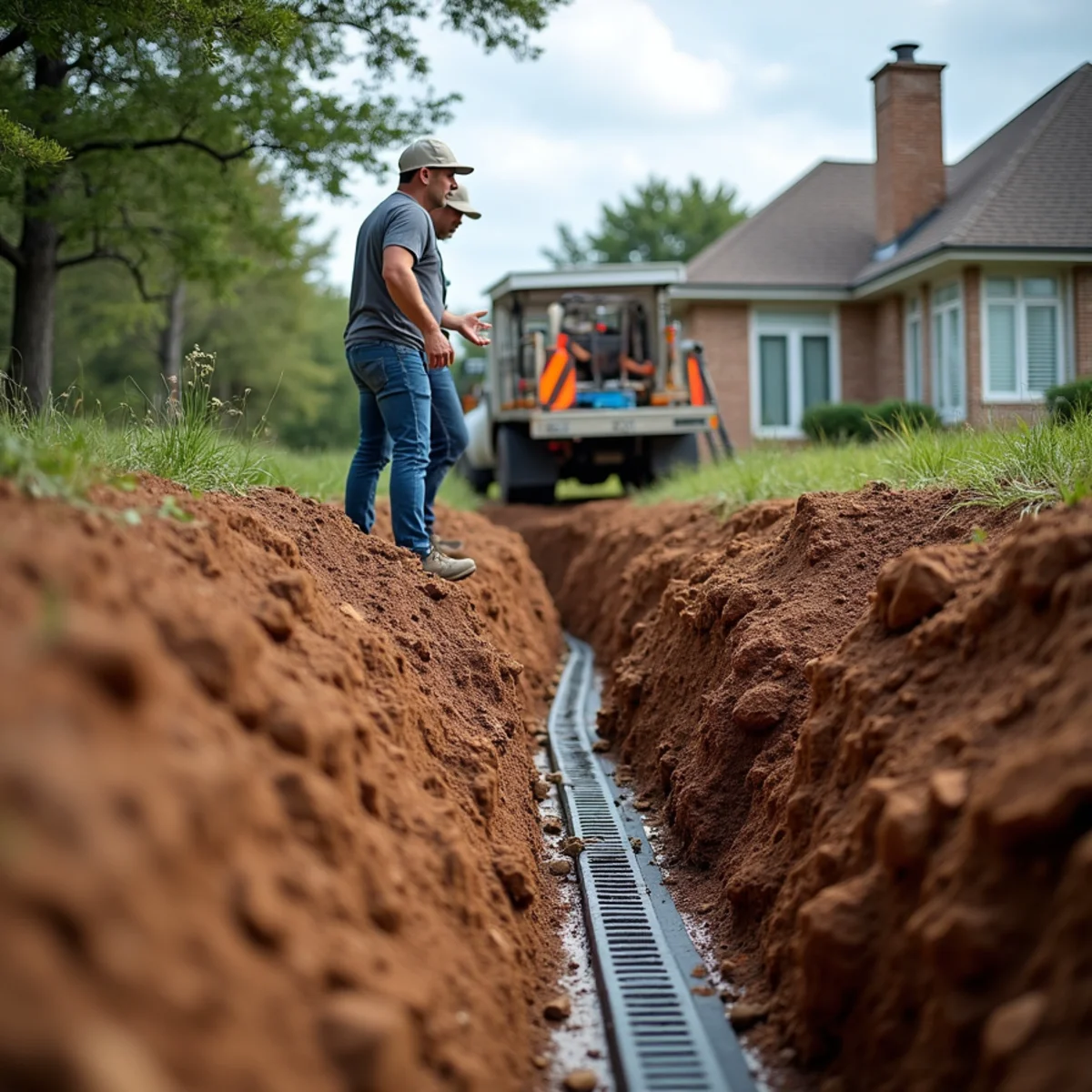
Drainage deserves a mention here too, because a beautiful patio in the wrong spot becomes a problem. Hardscape sheds water, so a large patio can concentrate runoff toward the house or a low corner if it is not pitched and drained correctly. Good outdoor-living design plans where that water goes from the start - a slight slope away from structures, a channel drain across a threshold, or beds positioned to absorb it - so your new patio solves nothing at the cost of creating a soggy yard elsewhere.
Think about the sequence, too. Hardscape, especially anything with footings like a pergola, fireplace, or outdoor kitchen, is far easier and cheaper to build before planting beds and irrigation go in around it. Trenching for a gas line to a fire feature or running electrical for lighting after everything is planted means tearing up finished work. A phased plan that puts the heavy construction first, then layers in planting and lighting, saves money and prevents the patchwork look of features added piecemeal over years.
The honest tradeoff is that doing outdoor living right in Central Texas costs more up front than a quick paver patio kit, because the site prep is real work. But hardscape built on the right base, oriented for shade, is a permanent extension of your home rather than a project you redo.
Design Your Backyard with Oakwood Landscaping
Whether you want a single flagstone patio or a full outdoor living space with a pergola, fire feature, and terraced limestone walls, Oakwood Landscaping designs and builds it for how Central Texas heat and clay behave - so it looks right and lasts. We work across Round Rock, Lakeway, and West Lake Hills with local stone and cedar.
We are licensed, insured, and BBB accredited, and we build the base right the first time. Call (323) 606-0255 for a free design consultation and estimate for your backyard.
Get Expert Help
Oakwood Landscaping can handle this for you across Round Rock and Central Texas. Explore the services in this guide: