Cost & Pricing· 6 min read· Updated
How Much Does a Retaining Wall Cost in Round Rock?
What a retaining wall costs in Round Rock: researched per-face-foot ranges by material and height, why drainage drives longevity, and when a wall needs engineering.
By the Oakwood Landscaping team · Reviewed by Emmanuel Heredia Sanchez, Owner & TCEQ Licensed Irrigator

A retaining wall in Round Rock typically runs a researched planning range of roughly $30 to $80 per face foot installed, where a face foot is one square foot of the wall's visible front. Segmental concrete block sits toward the lower end, natural limestone toward the higher end, and height is the biggest multiplier - taller walls hold back far more soil and pressure, so cost rises faster than height alone. Drainage behind the wall, though invisible, is what determines whether it stands for decades or bulges within a few years.
Those numbers are typical regional ranges collected for planning, not an Oakwood quote. Your real cost depends on wall length and height, material, how much excavation the slope needs, and whether the wall requires engineering. A low garden border and a structural wall holding a hillside are different projects at very different prices.
This guide explains what a face foot means, compares common materials, and shows why the drainage you cannot see is the line item that protects your investment. For a firm figure on your slope, call Oakwood at (323) 606-0255.
How Retaining Walls Are Priced: The Face Foot
Retaining walls are usually priced by the face foot - the area of the wall's exposed front - because that measure captures both length and height in one number. A wall 20 feet long and 3 feet tall is 60 face feet. This matters because two walls of the same length can cost very differently: doubling the height more than doubles the work, since a taller wall needs deeper footings, more base, stronger reinforcement, and holds exponentially more soil pressure.
Here is how the researched per-face-foot ranges typically break down by material, as planning context rather than a fixed price:
- Segmental concrete block (SRW): roughly $30 to $50 per face foot; engineered, modular, and cost-effective for most residential walls.
- Natural limestone or fieldstone: roughly $45 to $80+ per face foot; the premium Hill Country look with higher material and mason labor.
- Poured concrete: mid-range material cost but requires forming and often reinforcement; a clean modern finish.
- Boulder or dry-stack stone: varies widely with stone size and access; large boulders need machinery to place.
Why Height Changes Everything
Height is the factor that most changes both cost and complexity. Short walls under about four feet are typically straightforward landscape features. Once a wall exceeds roughly four feet of retained height, it holds back a serious volume of soil, and in most jurisdictions that height triggers a requirement for an engineered design and a permit. That engineering adds cost but is not optional - it is the difference between a wall that stands and one that fails.
Taller walls also need deeper, wider footings, more base material, geogrid reinforcement tied back into the soil, and sometimes tiering into multiple shorter walls instead of one tall one. On a steep Hill Country lot, the excavation alone can rival the cost of the wall material. This is why a quote for a tall structural wall is in a different league from a short decorative border, even at the same length.
Drainage: The Line Item That Saves the Wall
The most important part of a retaining wall is the part nobody sees. Water pressure - hydrostatic pressure - building up behind a wall is the number one cause of failure. On Round Rock's Blackland clay, which holds water and swells, that pressure is relentless. A wall built without proper drainage will lean, crack, or bulge as saturated clay pushes against it.
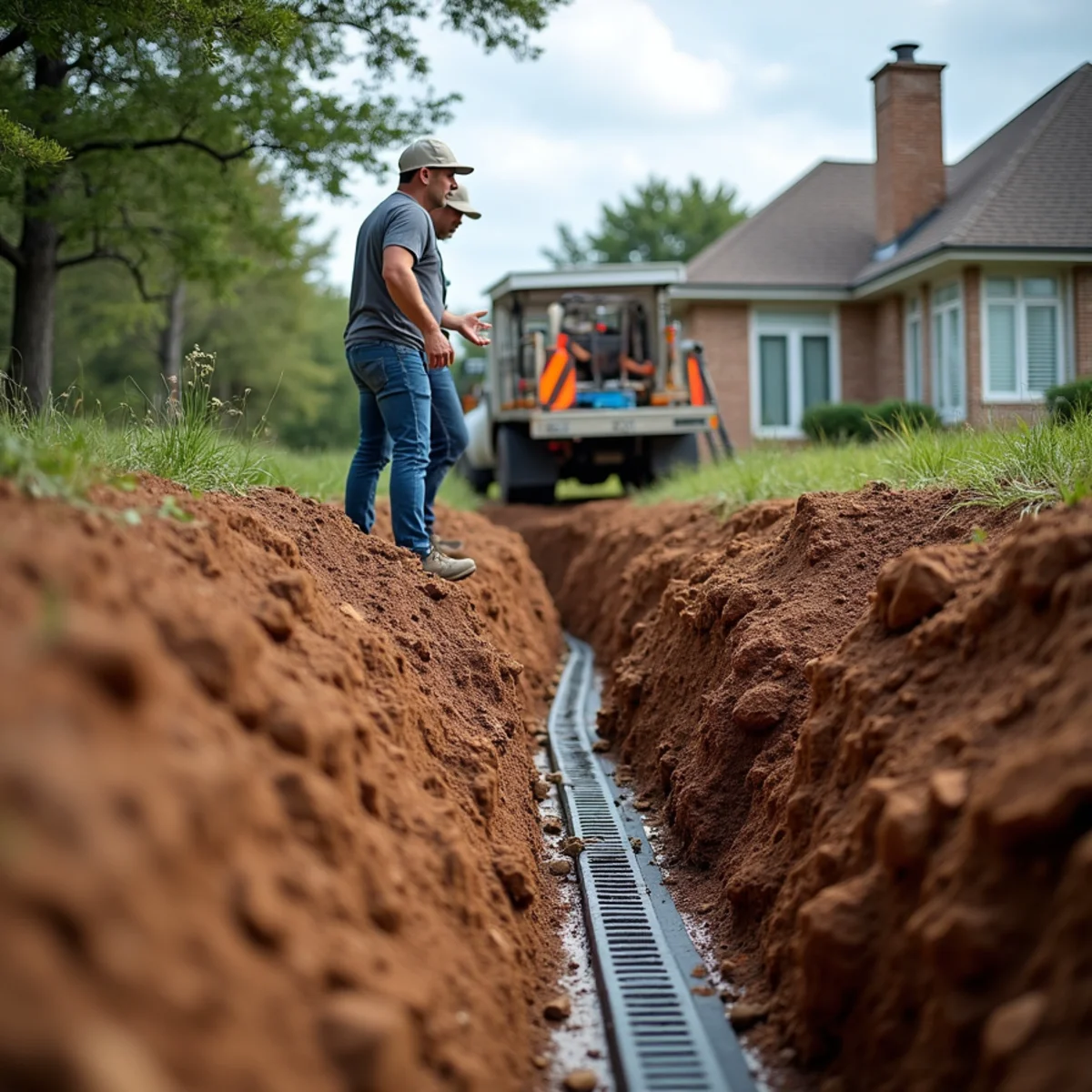
Correct drainage means a layer of free-draining gravel behind the wall, a perforated drain pipe at the base to carry water away, and filter fabric to keep soil from clogging the system. Weep holes or a French drain tie-in complete the picture. This work adds to the bid, and it is precisely where a cheap wall cuts corners. When you compare quotes, ask what happens to the water behind the wall - a vague answer is a warning sign.
A wall that fails is far more expensive than one built right, because repair means excavating, removing, and rebuilding. Paying for drainage up front is the cheapest insurance in the whole project.
Other Factors That Move the Quote
Beyond material, height, and drainage, several site conditions shift the price. Access is a big one: a wall a machine can reach costs less than one built by hand in a tight backyard. Soil conditions, the amount of excavation, the need to remove an old failing wall, and finish details like caps, steps, or integrated lighting all add up.
Length matters too, but it scales more predictably than height. Adding footage to a short wall raises cost roughly in proportion; adding height raises it steeply. If budget is tight, a longer low wall or a tiered design is often more economical than a single tall structural wall.
Budgeting, Phasing, and Getting the Most Wall for Your Money
If the ideal wall is beyond this year's budget, there are honest ways to control cost without compromising the structure. The wrong economies - skipping drainage, undersizing the footing, using the cheapest cap - come back as failures. The right economies are about design and material choices that lower the number safely.
The single biggest lever is height strategy. Where a slope allows it, terracing two shorter walls instead of one tall wall can eliminate the engineering and permitting a taller structure triggers, and shorter walls hold far less pressure, so each is simpler and cheaper to build. The tiered look is often more attractive too, creating planting beds between levels. Material is the next lever: choosing engineered concrete block over natural limestone can cut material cost substantially while performing just as well structurally - you are trading appearance, not integrity.
Access and site prep also move the number, and some of that is within your control. Clearing the work area, arranging for machine access, and removing an old wall yourself where safe can trim labor. What should never be on the cutting board is the gravel backfill, the drain pipe, and the footing depth - those are the parts that make the wall last. A good contractor will help you find savings in the design while protecting the fundamentals, rather than quietly shaving the parts you cannot see.
Get a Retaining Wall Quote from Oakwood Landscaping
A retaining wall is a structural investment that has to work against gravity, water, and expansive clay for decades. Oakwood Landscaping builds engineered block and natural limestone walls with the drainage, footings, and reinforcement that keep them standing on Central Texas slopes.
We are licensed, insured, and BBB accredited, and we handle everything from garden borders to structural hillside walls, including permitting and engineering when height requires it. Call (323) 606-0255 for a free site evaluation and a firm retaining wall quote for your Round Rock property.
Get Expert Help
Oakwood Landscaping can handle this for you across Round Rock and Central Texas. Explore the services in this guide: