Problem & Diagnosis· 6 min read· Updated
Why Your Wooden Fence Posts Are Rotting at the Base
Fence posts almost always fail at the soil line, not the top. Here is why Blackland clay rots the base and how crowned concrete and steel posts stop it.
By the Oakwood Landscaping team · Reviewed by Emmanuel Heredia Sanchez, Owner & TCEQ Licensed Irrigator
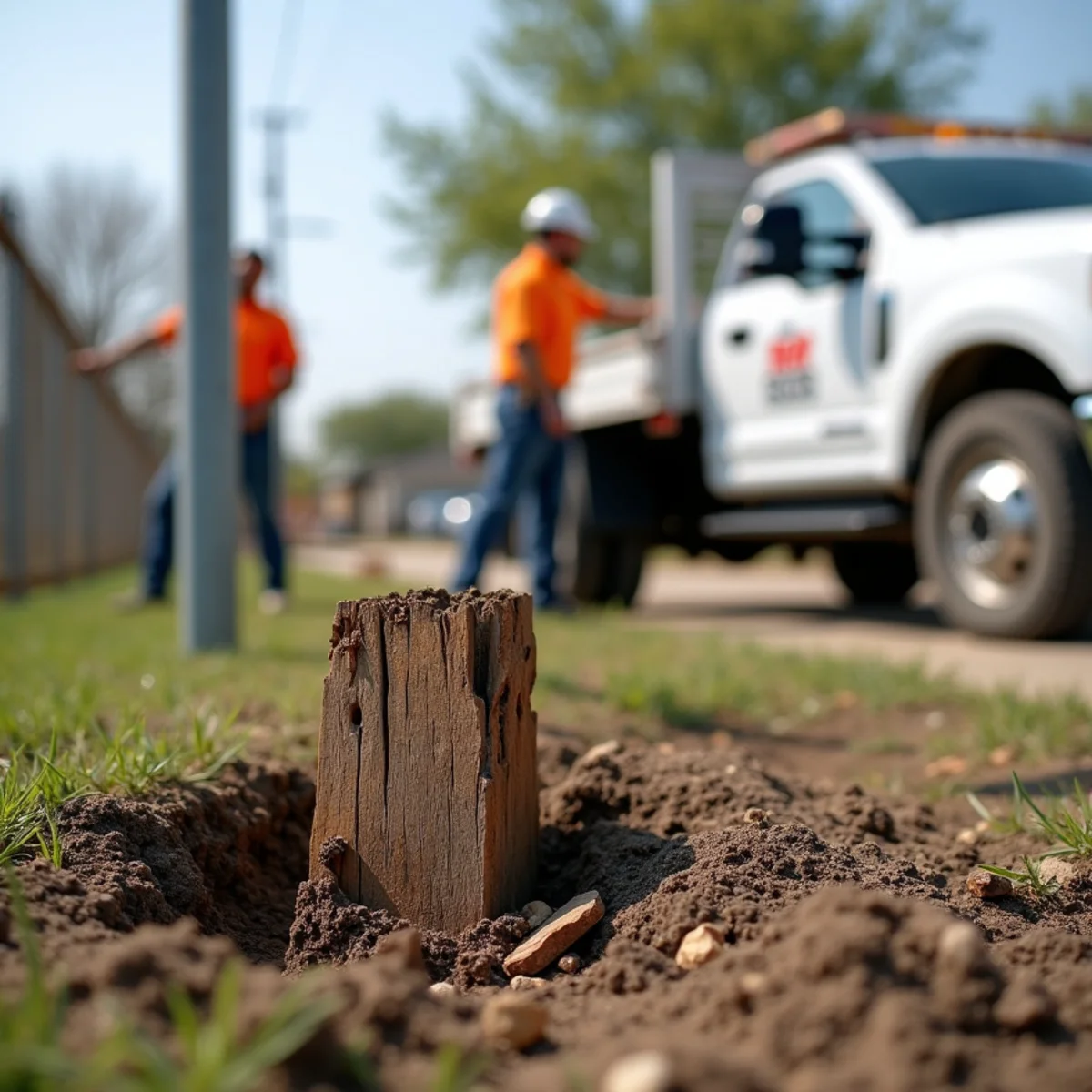
When a wood fence starts to lean or a section blows over in a spring storm, the failure point is almost never the top of the post. Dig down a few inches at the base and you will usually find the same thing: soft, punky, blackened wood right at the soil line, while the picket ends three feet up are still solid. The post did not wear out evenly - it rotted from one specific zone, and understanding why that zone fails is the key to building a fence that lasts.
In Round Rock, Cedar Park, and the surrounding Blackland Prairie, that base-rot problem is worse than in sandier parts of Texas. Our expansive clay soils hold water against wood, swell and shrink with every wet-dry cycle, and keep the base of a buried post in a slow-motion moisture trap. This article explains the mechanics of ground-line rot, then walks through the fixes that actually work - crowned concrete footings, the right species of wood, and galvanized steel posts.
The Ground-Contact Trap: Trapped Moisture in Blackland Clay Soils
Wood rot is caused by fungi, and fungi need three things to thrive: oxygen, food (the wood itself), and moisture. The one variable you can control is moisture, and the base of a fence post is the hardest place on the whole fence to keep dry. The soil line is a transition zone - the top of the post gets rained on but dries in the sun and wind, and the deeply buried portion is often too oxygen-starved for aggressive decay. But right where the post meets grade, you get the worst of both worlds: plenty of oxygen and near-constant moisture.
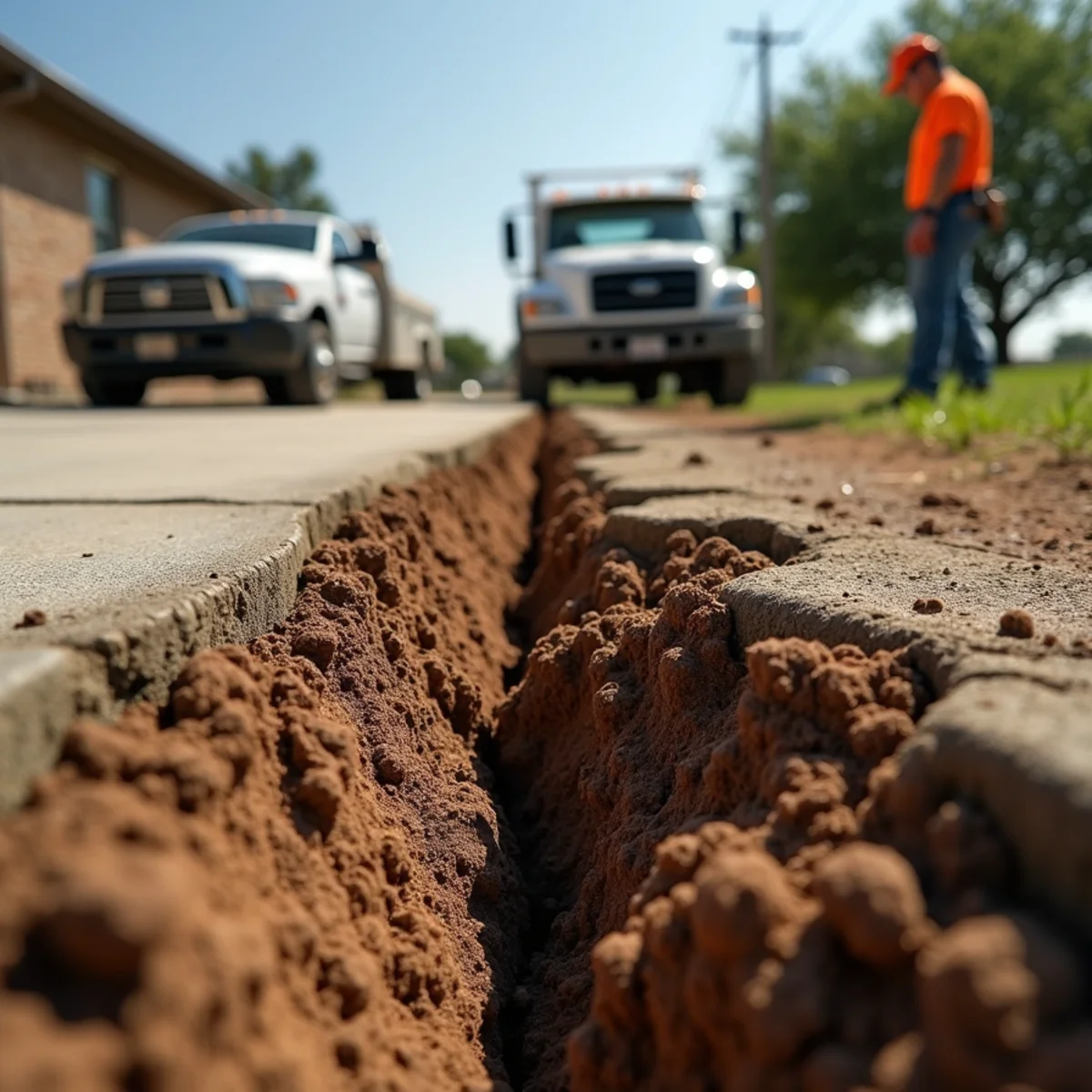
Blackland clay makes this dramatically worse. Central Texas sits on expansive montmorillonite vertisol - a heavy clay that behaves like a sponge. After our roughly 35.5 inches of annual rain, the clay swells and grips the buried post tightly, holding water directly against the wood for days. In drought, the same clay shrinks and pulls away, opening a gap around the post that funnels the next rain straight down to the base. That repeated wet-dry cycling keeps the ground-line zone damp far longer than the surface ever looks.
This is also why so many fences fail at the same age across a neighborhood. Builders install everything in one season, the posts all sit in the same clay, and roughly a decade later the ground-line rot reaches a tipping point on most of them within a year or two of each other. If your neighbors' fences are going over, yours is on the same clock.
Why Concrete Footings That Crown Above Grade Prevent Post Rot
Concrete around a fence post is not the villain people think it is - poured concrete is the strongest way to anchor a post in expansive clay. The mistake that causes rot is pouring the concrete flush with or below grade, creating a shallow bowl that collects water and holds it against the wood like a planter. That trapped water is what accelerates decay, and it is entirely avoidable.
The fix is a crowned footing. We slope the top of the concrete up around the post and away from it, so the surface sheds water like a tiny roof rather than pooling it. Rain hits the crown and runs off onto the surrounding soil instead of soaking down the post-concrete interface. Combined with the footing extending below the active clay zone, a crowned pour dramatically slows the moisture cycle that rots the base.
- Crown the concrete so it slopes away from the post on all sides - never leave a flat or cupped top.
- Set the footing deep enough to reach past the shrink-swell layer of the clay for lateral stability.
- Keep mulch, soil, and flower beds from being piled against the post base, which re-traps moisture.
- Avoid pouring concrete into a hole with standing water - it seals moisture in from day one.
Treated Pine vs Western Red Cedar: Rot Resistance Compared
The species of wood in contact with the ground matters as much as how it is set. Pressure-treated pine is chemically forced to resist rot, and treated-for-ground-contact pine posts do hold up reasonably well in the buried zone. The problem is that not all treated lumber is rated for ground contact - above-grade treated pickets and rails will rot fast if buried, and big-box bundles are easy to mix up.
Western Red Cedar resists rot naturally through tannins and oils rather than injected chemicals. Those extractives make cedar an excellent choice for the visible, above-ground parts of a fence - pickets and rails that stay drier and where cedar's dimensional stability and appearance shine. But cedar is not immune to ground-line decay, and burying a raw cedar post in wet clay will still eventually rot it. The honest answer most Central Texas builders have landed on is a hybrid: cedar for everything you see, and a rot-proof post for the part in the ground.
That is the tradeoff worth understanding. Choosing cedar pickets on a wood post that rots at the base gets you a beautiful fence that still fails in a decade. The durable answer usually means changing the post material itself, not just the wood grade.
The Ultimate Solution: Galvanized Steel Postmaster Fence Posts
The most durable fix for base rot is to stop putting wood in the ground at all. Galvanized steel line posts - commonly sold under the Postmaster name - are C-shaped steel posts set in concrete, with cedar pickets and rails screwed to the steel. Because the structural post is coated steel, there is no wood at the soil line to rot, and the part of the fence most exposed to weather is the part that cannot decay.
From the street, a steel-post cedar fence looks like a standard wood privacy fence, because everything you see is still cedar. What changes is the failure mode: instead of snapping at a rotted base in a windstorm, the fence stays anchored to steel. These posts also resist the leaning and racking that hand-set wood posts develop as clay heaves them over the years. For homeowners who are tired of rebuilding the same fence, the modest upcharge for steel posts often pays for itself the first time a storm rolls through and the fence is still standing.
Steel is not the only right answer for every yard - budget, HOA rules, and how long you plan to stay all factor in. But when the goal is a fence you install once and forget, steel posts with cedar cladding is the configuration we recommend most often across Round Rock and Cedar Park.
Can a Single Snapped Post Be Replaced Without Rebuilding the Fence?
Yes - in many cases a single failed post can be replaced without tearing out the whole run, and that is the first thing we assess on a service call. If the pickets and rails on either side are still sound and the rest of the posts are solid, we can remove the broken post and its old footing, dig a fresh hole, and set a new post so the existing sections tie back in. It is a targeted repair, not a rebuild.
The judgment call is whether the failed post is an isolated problem or the first domino. If we dig down and find that the adjacent posts are also punky at the base, replacing just one is throwing good money after bad - the fence next to it will fail within a season or two. In that situation we will tell you honestly, show you what we found, and let you decide between spot repairs and a planned upgrade. Storm damage is often covered differently than age-related rot, so it is worth documenting a snapped post before it is repaired.
Get a Durable Fence Upgrade Quote from Oakwood Landscaping
Base rot is predictable, which means it is preventable. Whether you need a single storm-snapped post reset or a full cedar-and-steel privacy fence built to outlast the clay it sits in, Oakwood Landscaping builds for how Central Texas soil actually behaves - crowned footings, ground-contact-rated materials, and steel where it counts.
Emmanuel Heredia Sanchez and the Oakwood team are licensed, insured, and BBB accredited, and we will give you an honest read on whether your fence needs a repair or a rebuild. Call (323) 606-0255 for a free estimate and a straight answer about your posts.
Get Expert Help
Oakwood Landscaping can handle this for you across Round Rock and Central Texas. Explore the services in this guide: