Drainage & Design· 6 min read· Updated
Rain Gardens: Water-Smart Drainage for Central Texas
How rain gardens turn Central Texas runoff into a landscape asset: how they work in clay, where to site them, native plants to use, and pairing them with French drains.
By the Oakwood Landscaping team · Reviewed by Emmanuel Heredia Sanchez, Owner & TCEQ Licensed Irrigator

A rain garden is a shallow, planted depression that captures stormwater runoff from roofs, driveways, and lawns, holds it briefly, and lets it soak into the ground instead of rushing into the street and creek. In Central Texas, where intense storms hit hard soil in what is known as Flash Flood Alley, a well-built rain garden slows runoff, reduces erosion and pooling, filters pollutants, and waters a bed of tough native plants for free. The design challenge here is Blackland clay, which drains slowly, so a Central Texas rain garden must be engineered for our soil rather than copied from a wetter climate.
Rain gardens are not ponds. They are designed to fill during a storm and drain within a day or so, which means they never hold standing water long enough to breed mosquitoes when built correctly. Between rains they look like an ordinary, attractive native bed. The result is a landscape feature that solves a drainage problem and looks intentional, rather than an ugly wet spot you keep fighting.
This guide explains how rain gardens function in our clay soil, how to site and size one, which native plants thrive in them, and how they pair with French drains for tougher drainage problems. For a rain garden or drainage plan designed for your yard, Oakwood Landscaping can help at (323) 606-0255.
How a Rain Garden Works in Clay Soil
A rain garden works by intercepting runoff and giving it time and room to infiltrate. Water is directed into a shallow basin, spreads out, ponds a few inches deep during the storm, and then percolates down over the following hours. Deep-rooted plants and an amended soil mix open channels for that water to move, while the plants take up moisture and filter out the fertilizers, oils, and sediment that runoff carries toward local creeks.
The complication in Central Texas is that Blackland clay drains very slowly on its own; a hole dug straight into unamended clay can hold water for days. That is why a proper rain garden here is not just a dug depression. It is built with an engineered soil mix, typically a blend of sand, compost, and topsoil, set over loosened subsoil so water actually moves through it. Where clay is especially tight, a gravel layer and an underdrain pipe carry away water that infiltrates too slowly, keeping the garden from becoming a standing pond.
Siting and Sizing Your Rain Garden
Location determines whether a rain garden helps or creates a new problem. Place it where runoff naturally flows, downslope of the source, but keep it a safe distance from the house so infiltrating water never threatens the foundation, a real concern in shrink-swell clay. It should sit in a relatively level spot, away from underground utilities, and away from septic systems and steep slopes.
Before building, always call 811 to have underground lines located; digging blind in Williamson County risks striking utilities. Test how fast your soil drains with a simple percolation test, and size the garden to the area draining into it and how quickly water soaks away. Follow these siting rules:
- Keep the garden at least 10 feet from the foundation so soaking water cannot undermine it.
- Position it downslope of the runoff source, such as a downspout or driveway edge.
- Choose a gently sloped, relatively level area, not the bottom of a steep grade.
- Avoid placing it over utilities or septic drain fields; call 811 before digging.
- Size it larger for bigger contributing areas and slower-draining clay, and add an overflow path for extreme storms.
Native Plants That Thrive in a Rain Garden
The best rain garden plants for Central Texas tolerate two extremes: brief flooding during storms and long dry spells between them. Tough natives handle this swing better than anything, and once established they need little supplemental water, keeping you within Round Rock's watering rules even in drought stages. Plant in zones, with the most water-tolerant species in the low center and the most drought-tough species on the higher edges.
Good choices include deep-rooted native grasses and sedges that slow water and hold soil, alongside flowering perennials that shrug off both wet and dry. Salvias, lantana, and Texas Sage do well on the drier upper edges, while moisture-tolerant natives suit the basin bottom. Deep root systems are the real engine of a rain garden, opening the clay so water infiltrates faster year after year. Mulch between plants to hold moisture, prevent erosion during inflow, and suppress weeds.
Pairing Rain Gardens With French Drains
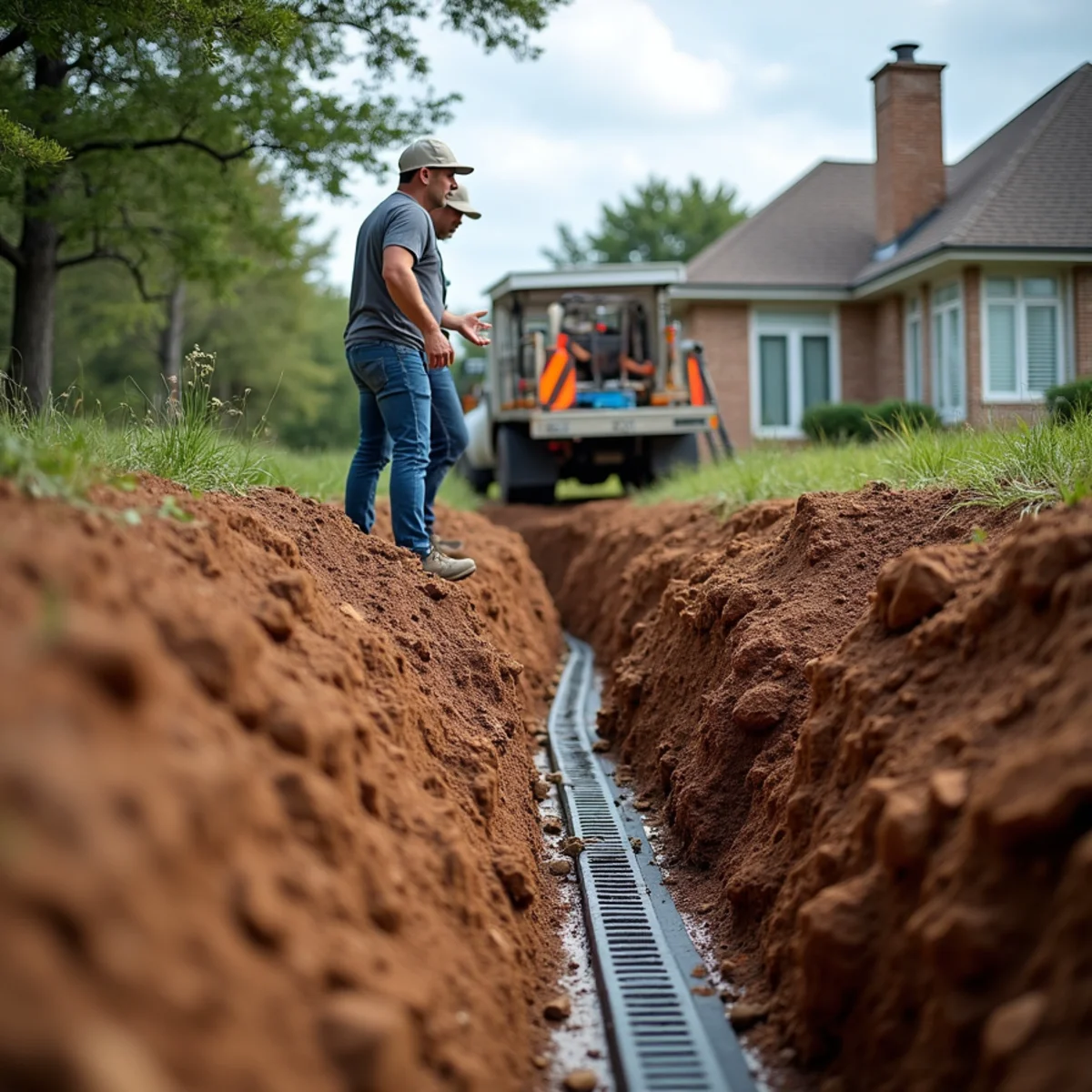
A rain garden handles diffuse runoff beautifully, but it is not the whole answer for every drainage problem. When water is concentrated, chronic, or moving fast, a rain garden alone can be overwhelmed. That is where a French drain, a gravel-filled trench with a perforated pipe that collects and redirects subsurface and surface water, becomes the partner piece.
The two work well together. A French drain can carry water away from a soggy foundation or a low spot and deliver it to a rain garden that then infiltrates and filters it, turning a nuisance flow into a landscape asset. In heavy Blackland clay, a French drain moves water the slow-draining soil cannot handle on its own, while the rain garden gives that water somewhere useful to go rather than dumping it straight into the storm system. For lots that flood or hold water badly, a combined system, sometimes with a catch basin or sump pump for the worst low points, is far more effective than any single fix.
Benefits Beyond Drainage
Rain gardens do more than solve a wet-yard problem. By slowing and soaking runoff on your own property, they reduce the flash-flood pulse that overwhelms Central Texas creeks during our roughly 35.5 inches of annual rain, much of which arrives in a few intense storms. They filter out lawn chemicals and sediment before that water reaches waterways, recharge groundwater, and reduce erosion across your lot.
They are also low-maintenance once established. Built with native plants matched to our climate, a rain garden needs occasional weeding, an annual mulch refresh, and little supplemental water. It turns the part of the yard that used to puddle into a living, attractive feature that supports pollinators and birds. Done right, it is drainage infrastructure that looks like a garden, which is exactly the point.
Design a Rain Garden With Oakwood Landscaping
A rain garden is one of the smartest ways to handle runoff in Central Texas, but in Blackland clay it has to be engineered, not guessed. Correct siting, an amended soil profile, an overflow plan, and the right native plants are the difference between a self-draining asset and a swampy mistake. Pairing it with drainage where needed makes it bulletproof.
Oakwood Landscaping is a TCEQ Licensed Irrigator, BBB accredited, licensed and insured. We design and build rain gardens, install French drains engineered for Blackland clay, and handle flood drainage and pump systems for tough lots. Call (323) 606-0255 for a drainage and rain garden consultation in Round Rock, Austin, and Hutto.
Get Expert Help
Oakwood Landscaping can handle this for you across Round Rock and Central Texas. Explore the services in this guide: