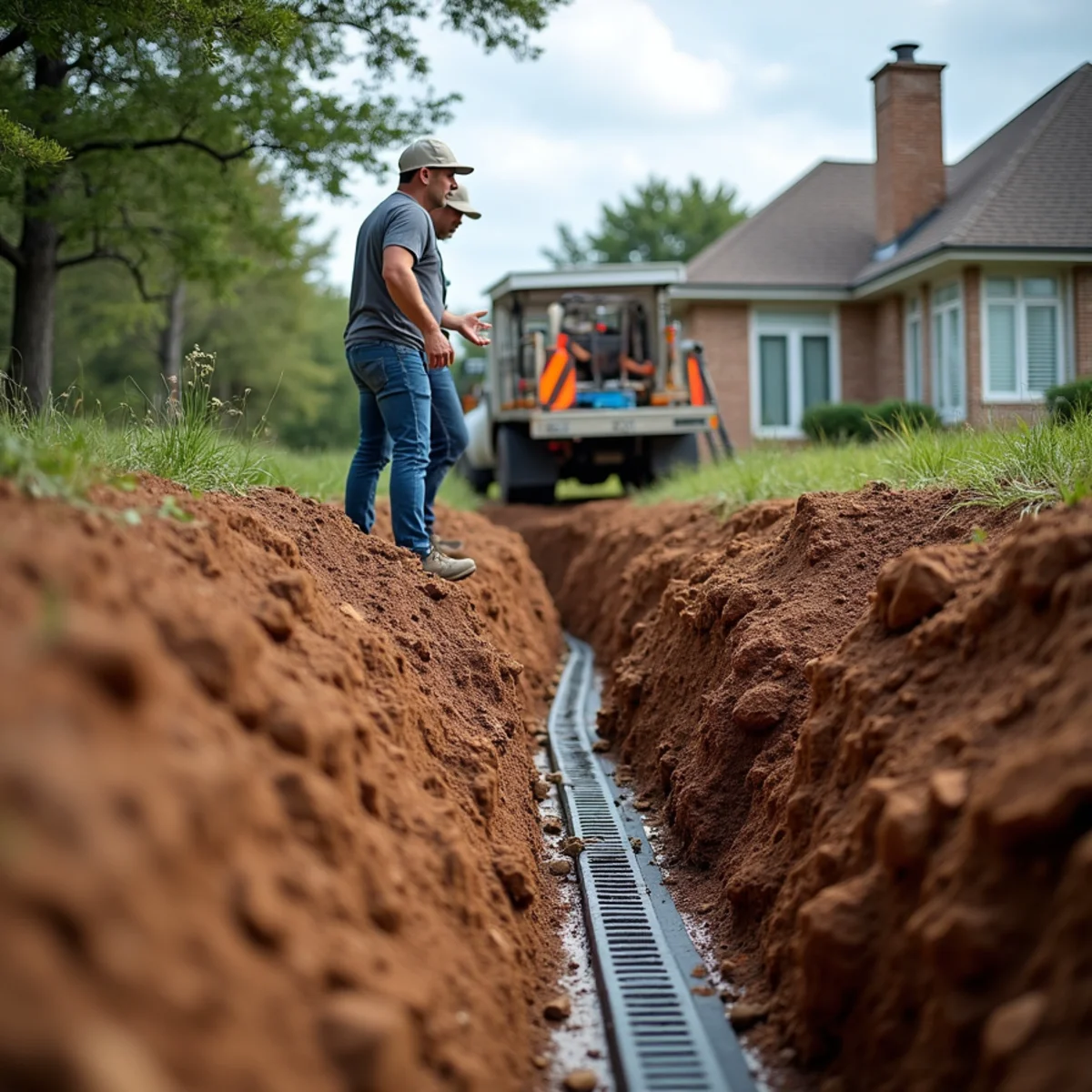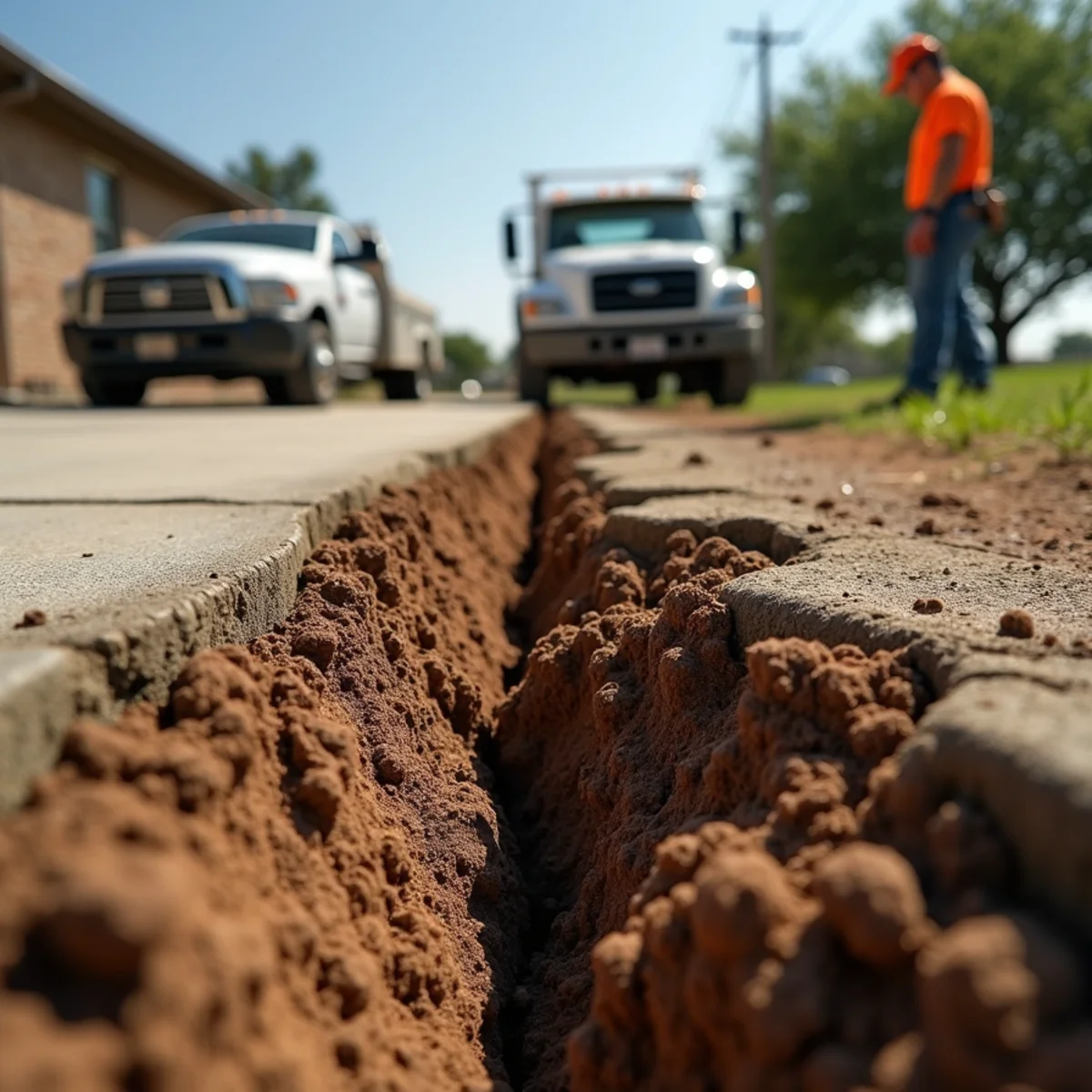

Oakwood provides emergency drainage response — pumping standing water, clearing blocked swales and drains, and redirecting flow away from the house — then designs permanent defenses so the next storm doesn't do the same damage.
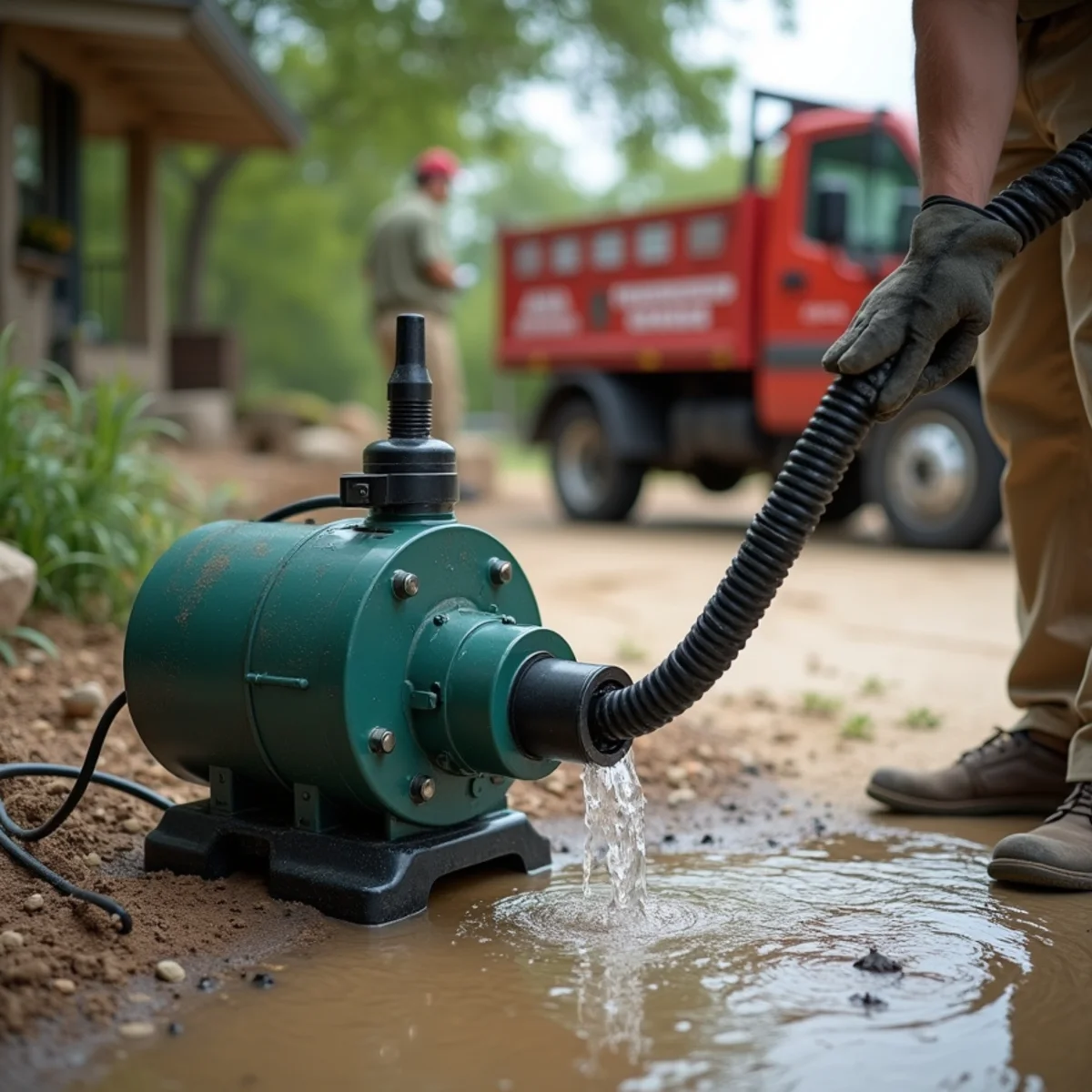
Storm drainage emergencies
- Water pooling against or under the foundation
- A yard that has become a pond after heavy rain
- Overwhelmed or clogged existing drains and swales
- Failed or overrun sump pump
- Erosion and washouts carving channels through the yard
- Water backing up toward the house from a low outfall
Emergency response, then permanent protection
First we stop the immediate threat: pumping standing water away from the structure, clearing debris from catch basins and swales, and opening or cutting temporary channels to move water to a safe discharge point. The goal is to relieve pressure on the foundation as fast as possible.
Once the storm passes, we assess why the yard flooded and engineer a permanent fix — deep French drains, dry creek beds, regrading, catch basins, and correctly sized discharge lines that carry storm volume to a legal outfall. Blackland clay's slow absorption means surface and subsurface drainage usually have to work together.
- Rapid pump-out of standing water near the structure
- Clear clogged basins, swales, and outfalls
- Temporary channels to relieve foundation pressure
- Post-storm assessment of failure points
- Permanent French drains, dry creek beds, and regrading
- Correctly sized discharge to a safe outfall
Why Central Texas floods so fast
Round Rock sits in the heart of Flash Flood Alley, one of the most flood-prone regions in North America. The Balcones Escarpment wrings intense rainfall out of Gulf moisture, and it's not unusual for four inches to fall in an hour. On top of that, Blackland prairie clay absorbs water extremely slowly, so most of that rain becomes runoff almost immediately.
That combination — high-intensity rain landing on soil that can't drink it fast enough — is why yards here go from dry to pond in minutes and why water finds the lowest point, often the foundation. It shapes how we design. We size discharge lines and channels for real storm volume rather than a light shower, and because clay drains poorly, we usually pair surface regrading with subsurface French drains so both the immediate runoff and the lingering saturation have somewhere to go.
What Affects the Cost
We don't post fake prices — every job is different. Here's what goes into an honest, written estimate:
- Volume of standing water and pumping required
- Extent of clogging, erosion, and debris
- Whether permanent drainage is added after response
- Excavation difficulty in saturated clay
- Length of discharge run to a safe outfall
- After-hours emergency response timing
Emergency response is scoped on arrival; permanent drainage is quoted after an elevation survey once the yard has dried enough to assess.
Why Round Rock Homeowners Choose Oakwood for Flash Flood Drainage & Pump Repair
Plenty of contractors will quote this work. Here's what you get with a licensed local crew that does it every week across Central Texas:
- 24/7 storm response to pump standing water off your slab and relieve hydrostatic pressure fast.
- We engineer permanent defenses sized for Flash Flood Alley intensity, not just a temporary pump-out.
- Rigid perforated PVC, dry creek beds, and correctly sized discharge carry storm volume to a legal outfall.
- Licensed, insured, BBB Accredited, with roughly 15 years of Central Texas storm-drainage experience.
Flash Flood Drainage & Pump Repair Across Round Rock & Central Texas
We're based in Round Rock and provide flash flood drainage & pump repair throughout Williamson and Travis counties and the surrounding region — from Round Rock, Pflugerville, Georgetown, Cedar Park, Hutto, and Brushy Creek. Because we know each area's soil, drainage, and code, the work is engineered for your specific property — not a generic template. See every community we cover on our service areas page, or call (323) 606-0255 for a free on-site estimate.